Showing posts with label Bride. Show all posts

Wednesday, October 2, 2019

What's Next?*

 
We are looking at the soon fulfillment of the Feast of Trumpets in front of us. At the sound of the great and Last Trump of God (Tekiah Gedolah) the moment of the catching away of the Bride of Christ will arrive:
"For this we say unto you by the word of the Lord, that we which are alive and remain unto the coming of the Lord shall not prevent them which are asleep. For the Lord himself shall descend from heaven with a shout, with the voice of the archangel, and with the trump of God: and the dead in Christ shall rise first: Then we which are alive and remain shall be caught up together with them in the clouds, to meet the Lord in the air: and so shall we ever be with the Lord."   1 Thess. 4:15-17
During theses fall feasts, especially considering the signs of the End Times around us, we need to be preparing for what happens next in God's prophetic timetable. The Bride of Christ is to prepare for the Marriage Supper of the Lamb:
"Let us be glad and rejoice, and give honour to him: for the marriage of the Lamb has come, and his wife hath made herself ready."  Rev. 19:7
The Bride is not ready to enter the Marriage Supper without her bridal garments of clean, fine, white linen, which is the righteousness of the saints. Our righteousness becomes our wedding raiment. With our obedience, Jesus establishes us in this His righteousness:
"To the end he may stablish your hearts unblameable in holiness before God, even our Father, at the coming of our Lord Jesus Christ with all his saints."  1 Thess. 3:13
We do not share a part of this Marriage Supper of the Lamb in just any spiritual condition, but rather as pure as a heavenly bride. We shall be shut into the bridal chamber, until the wrath of God has passed over those left on the earth: 
"Come, my people, enter thou into thy chambers, and shut thy doors about thee: hide thyself as it were for a little moment, until the indignation be overpast. For behold, the LORD cometh out of his place to punish the inhabitants of the earth for their iniquity: the earth also shall disclose her blood, and shall no more cover her slain."   Isa. 26:19-20
The word "chamber" used in the above verses of Isaiah, is the same word used to indicate a bridal chamber. The Lord Jesus has made the way for us to be protected from the coming wrath of God. Believers in Christ are not appointed to experience His wrath, however, those who do evil will see it (Jn. 3:36 1 Thes. 5:9). These feasts attest to the need for God's people to repent of evil, and come under the righteousness of Christ, wearing that clean white linen, prepared for the Marriage Supper.
This is a God-appointed time for Dr. Stevenson's book, "NAZAH: White Linen and the Blood of Sprinkling", to be available not only to the Church, but to the Jewish people who are observing these feasts, and would like to find their Messiah, Jesus: Yeshuah haMeshiach. This new book, Dr. Stevenson feels, is the most important work of his life. "NAZAH" is the culmination of having spent over forty years studying the Shroud of Turin. This white linen cloth is undoubtedly the burial cloth of a man crucified according to the descriptions in the Gospels, and forensic medical analysis. The use of such a burial cloth lines up perfectly with the Jewish burial customs of Christ's time. As testified by numerous scriptures, there is no doubt that this is the burial cloth of Jesus. Find out for yourself.
We would like to present this trailer about the book, "NAZAH". Please watch the trailer, order the book, and help get this book and its message to as many as possible. Now is the time, now is the season.
 
*The above is based upon the 9/29/19 message to the Church from Dr. Kenneth Stevenson. 
To Contact/Submit prayer requests/Support the ministry/Order the book, "NAZAH-White Linen and the Blood of Sprinkling", and to help us get out the message:

Dr. Kenneth Stevenson
P.O. Box 154221
Waco, TX  76705

https://twitter.com/everlastingcov8


http://endtimeschool.com/

To watch/hear Dr. Stevenson's complete message:

https://twitter.com/everlastingcov8

Prayer of Salvation for all who desire to receive Jesus as their Savior: Lord Jesus, I desire to know You, and to know Your salvation. I believe that You died for me, and that You were resurrected for me. Forgive me of my sins. Come into my heart, change me, fill me with Your righteousness. Inscribe my name in the Lamb's book of life. Baptize me in Your Holy Spirit, so that I can learn the truth of Your Word and ways, and be strengthened in my walk all the days of my life. You are the hope of my life, and You are my eternal life. I place my trust in You, Lord, for myself, and my whole household. Use me to do the will of the heavenly Father, Who sent You, in Whose name You came. In Your name, and in thanks and praise I pray, Amen.
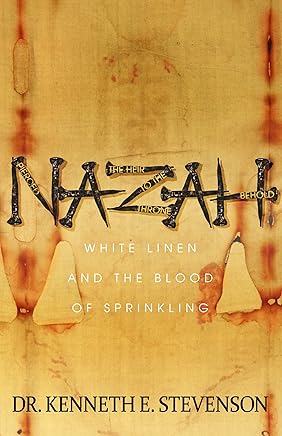
 
Dr. Stevenson's newest book is now available:
NAZAH: White Linen and the Blood of Sprinkling  


Tuesday, March 26, 2019

Purim, Persia, and the Third Day*

Esther Comes Before the King
 
We are entering the season of Purim, a rabbinical feast of Israel. Purim revolves around a miraculous event from the Book of Esther. Esther also has a prophetic significance to the Church in these last days. The spiritual principalities and wickedness of the End Times that are revealed in Revelation, also have a striking similarity to the story of Esther and Purim:
"...the accuser of the brethren is cast down, which accused them before our God day and night. And they overcame him by the blood of the Lamb, and by the word of their testimony; and they loved not their lives unto the death. Therefore rejoice ye heavens and ye that dwell in them. Woe to the inhabiters of the earth and of the sea! for the devil is come down unto you, having great wrath, because he knoweth that he hath but a short time.. And when the dragon saw that he was cast unto the earth, he persecuted the woman which brought forth the man child....And the dragon was wroth (violent anger, enraged; root- to stretch one's self out in order to touch or grasp something, to covet, to give one's self up to the love of money)with the woman, and went to make war with the remnant of her seed, which keep the commandments of God, and have the testimony of Jesus Christ."   Rev. 12:10-13, 17
The devil, the dragon is enraged against the people of God in these verses from Revelation, and his actions and persecutions stem from that rage. It is the same with the enemy in the Book of Esther, Haman. The dragon from Revelation spews water like a flood from his mouth to wipe out the woman who gave birth to the man child (Rev. 12:15). The letters of Haman's name in pictographical Hebrew refer to the revealing of a massive flood of chaos against the son/Son, the heir to the throne, the descendants.
This enemy, Haman, driven by rage and resentment against one man, Mordecai, who refused to bow down and pay Haman homage and worship, enlarged his rage to encompass the destruction of all of the Jews in Persia (now Iran). Mordecai explained that he could not worship a man because as a Jew, he could only worship God (Esther 3:1-6). Haman, like the devil in Revelation, accused Mordecai and the Jewish people before the king, and the king allowed Haman to issue a decree for the destruction of the Jews, and to take the spoil of them, setting a specific date for it that had been selected by casting lots (Pur) (v. 8-11). As the news of this decree spread, the Jews across the whole land fasted, cried and repented before God. How was this plot of destruction to be overcome? It was accomplished by the grace and favor of God upon one young Jewish woman, the bride of the great king of Persia, Ahasuerus, whose name was Esther. Mordecai even told Esther that it is possible that she was born for just this purpose.
After telling the Jewish people to fast and pray for three days, Esther risked her life to approach the king out of proper order. Approaching the king without being summoned first was punishable by death. However, when the king saw Esther in all her royal robes, she obtained favor in his sight, and he extended his scepter to her so that she might approach him safely (Esther 5:1-2). Esther requested the king's and Haman's presence at a banquet of wine that she would prepare. At the second banquet, Esther exposed Haman to the king, and Haman and his household were destroyed. The king ultimately overrode Haman's decree calling for the destruction of the Jews. He issued a decree in his own name, sealed with his own seal. Written in this way, it became a decree that no man could reverse (Est. 8:7-10).
The Bride of Christ is also purposed and called to a banquet, royally arrayed in righteousness, to the Marriage Supper of the Lamb:
"Let us be glad and rejoice and give honor to him: for the marriage of the Lamb is come, and his wife hath made herself ready. And to her was granted that she should be arrayed in fine linen, clean and white: for the fine linen is the righteousness of saints..."Blessed are they which are called unto the marriage supper of the Lamb."  Rev. 19:7-9
Esther used the principle of "the third day" in her preparation for her entrance to the king, and her confrontation with Haman and his evil plan. The prophet Hosea connected "the third day" with the Messiah, His and our resurrection, and His twice coming:
"Come and let us return unto the LORD: for he hath torn, and he will heal us; he hath smitten, and he will bind us up. After two days will he revive us: in the third day he will raise us up and we shall live in his sight...and he shall come unto us as the rain, as the latter and former rain unto the earth."   Hos. 6:1-3
The Apostle Peter clarified this principle for us regarding the return of Christ, as well as its importance in the events of the End Times for the Church:
"But, beloved, be not ignorant of this one thing, that one day is with the Lord as a thousand years, and a thousand years as one day."   2 Peter 3:8
Two thousand years, or two days, have already passed since the death, burial, and resurrection of Christ, and we are entering into the third millennial, or third day. Persia, or Iran, which played such an important role in the Book of Esther, is once again emerging into the world spotlight as a sponsor of terrorism and its agents in various parts of the world. The declared aim of those terrorists, today's Hamans, like the enraged dragon of Revelation, is to push Israel into the sea, and to make war with those who support Israel, and believe the Messiah of Israel.
Events and timing indicates that the marriage supper of the Lamb grows near, but is the Bride preparing, as Esther did, to make the difference in these End Times, to prepare for the banquet of wine?  Let this season of Purim become a call to the Church to prepare herself in fasting, repentance, and prayer, to don her royal robes, to enter before and petition the King, and to enter into the banquet with Him.

*The above is based upon the 3/24/19 message to the Church from Dr. Kenneth Stevenson.
 
To Contact/Submit prayer requests/Support the ministry/Order the book, "NAZAH":

https://twitter.com/everlastingcov8


http://endtimeschool.com/

To watch/hear Dr. Stevenson's complete message:

https://twitter.com/everlastingcov8

Prayer of Salvation for all who desire to receive Jesus as their Savior: Lord Jesus, I desire to know You, and to know Your salvation. I believe that You died for me, and that You were resurrected for me. Forgive me of my sins. Come into my heart, change me, fill me with Your righteousness. Inscribe my name in the Lamb's book of life. Baptize me in Your Holy Spirit, so that I can learn the truth of Your Word and ways, and be strengthened in my walk all the days of my life. You are the hope of my life, and You are my eternal life. I place my trust in You, Lord, for myself, and my whole household. Use me to do the will of the heavenly Father, Who sent You, in Whose name You came. In Your name, and in thanks and praise I pray, Amen.
 
Dr. Stevenson's newest book is now available:
NAZAH: White Linen and the Blood of Sprinkling  

Tuesday, May 1, 2018

Preparing for the Marriage of the Lamb

(Bride praying at the Western Wall-Jerusalem)
 
Centuries ago, the Church made the decision to remove itself from its Jewish origins and heritage. When we did this, we lost something very valuable to our faith, walk, and understanding. Much of our relationship with Christ as described in the scriptures can be traced back to Jewish marriage customs. One of the most important upcoming spiritual events the Church, more accurately called the Ekklesia (the called out assembly of God's people), will experience, is a Jewish marriage to Christ: 
"Let us be glad and rejoice, and give honor to him (the Lord God Omnipotent): for the marriage of the Lamb has come, and his wife hath made herself ready. And to her was granted (used in reference to something given by God, or a king) that she should be arrayed in fine linen, clean and white: for the fine linen is the righteousness of the saints. And he saith unto me, Write, Blessed are they which are called  unto the marriage supper of the Lamb. And he saith unto me, These are the true sayings of God."   Rev. 19:7-9
It is important to know the Jewish marriage customs, because the Lamb's wife "has made herself ready" for this prophetic event that is about to be fulfilled. We cannot make ourselves ready unless we understand what this means. These customs are also important to know because Jesus referred to them.
At the beginning of the forming of a marriage in the Jewish tradition, the father of the prospective groom chooses a woman whom he feels is a good marriage candidate for his son. He goes with his son to the woman's house and they knock. By answering the door, the young lady is stating her acceptance of the young man. They enter the home, where a meal has been prepared. Jesus described this for us:
"Behold, I stand at the door and knock: if any man hear my voice, and open the door, I will come in to him, and will sup with him, and he with me."   Rev. 3:20
A wedding covenant, or contract, is established at that time, which is called a Ketubah. By this covenant, promises are made by the groom to the bride. Guarantees are given pertaining to property and inheritance. As the bride and groom, and their families, sign the Ketubah, an engagement is established. That engagement commitment is almost as strong as the marriage itself. All it lacks in comparison is the consummation.
The meal, and the wine shared at the table, seal the covenant, as Christ's body and blood, represented by the bread and wine of the communion table (koinonia-intercourse, fellowship, intimacy, the sign, proof, and pledge of same), sealed our covenant agreement, or Ketubah, with Him (Lk. 22:20). Jesus said that He will not drink the wine again until He can drink it new with us in His Father's kingdom (Mt. 26:26). Peter assures us that our bride price was not paid with gold and silver, but with this blood of Christ, the Lamb without spot or blemish, who was foreordained before the foundation of the world (1 Pet. 1:18-20).
The Jewish groom then leaves the bride's house, returning to his father's house, where, under his father's supervision, he prepares a home for his soon bride. The groom cannot return for the bride until his father agrees that all has been made ready for her. Jesus promised us this same preparation:
"Let not your heart be troubled: ye believe in God, believe also in me. In my father's house are many mansions: if it were not so, I would have told you. I go to prepare a place for you. And if I go and prepare a place for you, I will come again and receive you unto myself; that where I am, there ye may be also."   Jn. 14:1-3
Those present, hearing these words of Christ, would immediately associate them with the marriage customs, and the Ketubah covenant. Jesus wants us to "believe also in him". His promise here to us is as iron-clad as a Jewish Ketubah contract. We have lost the precious understanding of this, as we discarded our Jewish roots.
Before we leave the subject of the Ketubah, we should compare the guarantees or promises it contains to the future bride, with the promises made to us in our Ketubah with Christ. Peter wrote that we obtain these promises of "an inheritance incorruptible, and undefiled...that fadeth not away, reserved in heaven for you." (1 Peter 1). Peter also describes them as being "great and precious promises", all things that pertain unto life and godliness, through which we become partakers of the divine nature. These promises remove us from the carnality of sin, that we should be neither barren nor unfruitful (2 Pet. 1).
As we said, the Ketubah marriage contract gives the bride certain material guarantees. So also does our Ketubah covenant with Christ. As we trust and believe Christ, "ye were sealed with that holy Spirit of promise, which is the earnest (down payment, security for full amount subsequently to be paid) of our inheritance, until the redemption of the purchased possession..."  Eph. 1:12-14
The "earnest", or Spirit, is a guarantee of an inheritance, as the bride is guaranteed an inheritance by the Ketubah. This "earnest" or guarantee also assures us that this earthly house in which we are currently clothed, will be replaced by a house which is from heaven, for which we groan and desire. It is like receiving a title deed:
"Now he that hath wrought us for the selfsame thing is God, who also hath given unto us the earnest of the Holy Spirit...we are confident that absent from the body...present with the Lord."  2 Cor. 5:1-8
The Holy Spirit promised and given to us by Jesus, is the earnest, or guarantee, of the heavenly house with which we will be clothed, as a house would be provided in a Ketubah contract.
According to the Jewish marriage customs, while the groom is preparing the house for his bride, the bride is also preparing, and making herself ready. One thing that the bride has to do is to take a ritual cleansing bath called a Mikvah, in order to achieve purity. Living (moving) water is sometimes required for the Mikvah. Paul tells us that those who are full of the impurity of sin, in such a condition, cannot "inherit" the kingdom of God. "And such were some of you: but ye are washed, but ye are sanctified, but ye are justified in the name of the Lord Jesus, and by the Spirit of our God."  1 Cor. 6:9-11
Like the Jewish bride, we are to be washed before we receive our inheritance. In scripture, our relationship with Christ is compared to a relationship between husband and wife, Like a husband is supposed to love and give himself to his wife, "Christ also loved the church, and gave himself for it; that he might sanctify and cleanse it with the washing of water by the word, that he might present it to himself...not having spot or wrinkle, or any such thing; but that it should be holy and without blemish."   Eph. 6:25-27
Have we allowed Christ to cleanse us in the bridal mikvah? Are we prepared in a way to receive our inheritance?
Lastly, the Jewish bride prepares her wedding garments. For us, the believer, our verse from Rev. 19 at the top of the page, describes those bridal garments. Those garments reflect the righteousness of the saints. It is not a righteousness "earned" by obeying the Law, but as in our whole marriage relationship with Christ, it is a righteousness of works that have been manifested in our hearts and lives by our faith. Our works do not replace our faith, but are the manifestation of our faith. These faith-created works cover us as a pure wedding garment covers a bride. Those without the appropriate wedding garments, will not be allowed to enter the marriage supper (Mt. 22:11-14).
Are our wedding garments prepared? Have we, the bride of Christ, made ourselves ready? The marriage supper of the Lamb could happen at any moment. Let us use the lessons from the Jewish marriage customs, which Jesus taught and to which scripture refers, to understand how to prepare for this soon event.

To Contact/Submit Prayer Request/Support the Ministry:
To obtain your copy of Dr. Stevenson's new book, "NAZAH-White Linen and the Blood of sprinkling":
https://twitter.com/everlastingcov8
http://endtimeschool.com/
To watch the complete message:
https://www.facebook.com/kenneth.e.stevenson/videos/10211589794762267/
https://www.youtube.com/watch?v=TAMiHJUswyQ


Prayer of Salvation for all who desire to receive Jesus as their Savior:

Lord Jesus, open the eyes of my heart. I want to know You as my Lord, and as my Savior, who covers my sins, and cleanses my heart. Come into my heart, and also fill me with the Holy Spirit, who will lead me into all truth, and will teach me how to follow You. I believe that You are the Son of God, the Messiah, that You were crucified for me, and rose from the dead to give me everlasting life. I believe that You are coming again. Lord Jesus, in Your name I believe, pray, and receive all of these things. Amen.


Tuesday, September 19, 2017

The High Holy Days & The Marriage Supper

 
This week, we are entering the days of the Fall Feasts of the LORD. These feasts include:
  • The Feast of Trumpets, also known as Rosh Hashanah
  • The Feast of Atonement, also called Yom Kippur
  • The Feast of Tabernacles, or Sukkot
This season of fall feasts is called "the high holy days". Throughout these high holy days, there are Torah readings in the synagogues, which are followed by Haftarah (leaving, departure) selections. "Haftarah" refers to the Books of the Prophets, or nevi'im. These selections from the Prophets are usually sung, or chanted, rather than read. A large selection from the Prophet Isaiah, including 61:10-63:9, plays an important roll during these high holy days of the fall feasts. They are glorious passages of salvation and restoration. The imagery given to Isaiah from the LORD in these prophetic verses includes that of a bride, a bridegroom, and a marriage:
"I will greatly rejoice in the LORD, my soul shall be joyful in my God; for he hath clothed me with the garments of salvation, he hath covered me with the robe of righteousness, as a bridegroom decketh himself with ornaments, and as a bride adorneth herself with her jewels. For as the earth bringeth forth her bud, and as a garden causeth the things that are sown in it to spring forth; so the LORD God will cause righteousness and praise to spring forth before all nations."   Isa. 61:10-11
This bridal description is an instant reminder of the verses from Revelation:
"Let us be glad and rejoice, and give honor to him: for the marriage of the Lamb is come, and his wife hath made herself ready. And to her was granted that she should be arrayed in fine linen, clean and white: for the fine linen is the righteousness of saints. And he saith unto me, "Write, Blessed are they which are called unto the marriage supper of the Lamb." And, he saith unto me, "These are the true sayings of God."   Rev. 19:7-9
Both the high holy day verses from Isaiah, and Revelation also tell us about a new name which is given us:
"And the Gentiles shall see thy righteousness, and all kings thy glory: and thou shalt be called by a new name, which the mouth of the LORD shall name."   Isa. 62:2
"He that hath an ear, let him hear what the Spirit saith unto the churches; To him that overcometh will I give to eat of the hidden manna, and will give him a white stone, and in the stone a new name written, which no man knoweth saving he that receiveth it....Him that overcometh will I make a pillar in the temple of my God...and I will write upon him the name of my God, and the name of the city of my God, which is new Jerusalem, which cometh down out of heaven from my God: and I will write upon him my new name." Rev. 2:17, 3:12
The new name given by the LORD is set as part of the marriage theme in Isaiah. Even the land receives a new name through marriage:
"Thou shalt no more be termed (called, named) Forsaken; neither shall thy land any more be termed Desolate: but thou shalt be called Hephzi-bah ("My delight is in her"), and thy land Beulah ("Marry"): for the LORD delighteth in thee, and thy land shall be married. For as a young man marrieth a virgin, so shall thy sons marry thee: and as a bridegroom rejoiceth over a bride, so shall thy God rejoice over thee."  Isa. 62:4-5
What brought about this joyful marriage, and its resulting transformation, and restoration? It is the coming of, and the work of, Salvation:
"Behold, the LORD hath proclaimed unto the end of the world, "Say ye to the daughter of Zion, Behold thy salvation cometh; behold his reward is with him (Rev. 22:12), and his work before him. And they shall call them The holy people, The redeemed of the LORD: and thou shalt be called Sought out, A city not forsaken."   Isa. 62:11-12
As we can see in the verses above, the Salvation spoken of is a person (also see Isa. 63:1). This person of salvation, our Messiah, is clothed in special garments. His robe will be marked by the effects of the great battle by which He redeems those who have been held captive:
"Wherefore art thou red in thine apparel, and thy garments like him that treadeth in the
winef(v)at? I have trodden the winepress alone; and of the people there was none with me: for I will tread them in mine anger, and trample them in my fury; and their blood shall be sprinkled upon my garments, and I will stain all my raiment...and the year of my redeemed is come."   Isa. 63:2-3, 4b
This same vision of the Redeemer from Isaiah is given to us in Revelation following the marriage supper of the Lamb:
"And he was clothed in a vesture dipped in blood: and his name is called The Word of God, and the armies which were in heaven followed him upon white horses, clothed in fine linen, white and clean. And out of his mouth goeth a sharp sword, that with it he shall smite the nations: and he shall rule them with a rod of iron: and he treadeth the winepress of the fierceness and wrath of Almighty God. And he hath on his vesture and on his thigh a name written, KING OF KINGS, AND LORD OF LORDS."   Rev. 19:13-16
We have no trouble recognizing the Person of Salvation, the Redeemer referred to in these Haftarah verses from Isaiah. He is our Jesus.
As these verses from Isaiah about a bride, a bridegroom, a wedding, and a great work of salvation and redemption are sung and chanted during the high holy days, the hopes and cries of many hearts will be ascending to heaven. The final verse sung from the Haftarah portion of Isaiah will be:
"For he said, surely they are my people, children that will not lie: so he was their Savior. In all their affliction, he was afflicted (see Isa. 53:3-5), and the angel (messenger) of his presence (face) saved them: in his love, and in his pity he redeemed them; and he bare (lifted up) them, and carried (carried away) them all the days of old (perpetual, everlasting time)."  Isa. 63:8-9
 
 
To Contact/Give:
PO Box 155
Christmas, FL. 32709
PayPal available
 
To watch the complete message:
 
To hear previous messages:


Wednesday, August 30, 2017

Weaving Your Wedding Garment

 
Previously, we discussed the Jewish marriage covenant, or contract, called a Ketubah. Most of the obligations of the contract, which involves financial security for the wife, falls upon the groom to guarantee and fulfill. In Christ's marriage covenant with us, His bride, the same applies. He has guaranteed with His own blood, our eternal security, and our spiritual position seated with Him.
Once the bride accepts the Ketubah marriage contract that the groom proposes, she begins her preparations for the upcoming wedding. These wedding preparations include ritual cleansings, called mikvahs, for the purpose of purity and holiness, and the weaving of her bridal garment. We see this same kind of preparation involved in the marriage of Christ and His Church:
"Husbands, love your wives, even as Christ also loved the church, and gave Himself for it; That He might sanctify and cleanse it with the washing of water by the word, that He might present it to Himself a glorious church, not having spot or wrinkle, or any such thing; but that it should be holy and without blemish."    Eph. 5:26-27
The Hebrew word for bride is "kallah", which means "perfect, complete, the son's wife". The root word, "kalal" is a verb meaning "to complete, to perfect". Both words also include a meaning "to put a crown upon". In Jewish weddings, the bride is very much treated as a queen. There is a transformation that results from the bride's marriage preparations, through which the bride goes from being a betrothed woman, to a wife. According to scripture, this transformation through the joining of marriage, and prophetically speaking, the marriage of the Lamb and His wife, has a wide-ranging effect far beyond the two immediately involved:
"I will greatly rejoice in the LORD, my soul shall be joyful in my God; for He hath clothed me with garments of salvation, He hath covered me with the robe of righteousness, as a bridegroom decketh himself with ornaments, and as a bride adorneth herself with her jewels. For as the earth bringeth forth her bud, and as a garden causeth the things that are sown in it to spring forth; so the LORD God will cause righteousness and praise to spring forth before all the nations."    Isa. 61:10-11
We know this is the Messiah speaking, because Jesus identified Himself as fulfilling the scriptures in His reading of Isaiah 61:1-2a in the synagogue (Lk. 4:18). This is the same voice speaking throughout this section of scripture. All of the nations will be changed as the Bride and her Savior Groom are joined together in the wedding. The marriage is immediately connected with the return and reign of Messiah on earth. We can understand the great rejoicing connected with this event when we see the resulting transformation in the land:
"...the Gentiles shall see thy righteousness, and all kings thy glory: and thou shalt be called by a new name, which the mouth of the LORD shall name. Thou shalt also be a crown of glory...and a royal diadem in the hand of thy God. Thou shalt no more be termed Forsaken; neither shall thy land any more be termed Desolate: but thou shalt be called Hephzibah ("My delight is in her"), and thy land Beulah ("married, married wife, husband"): for the LORD delighteth in thee, and thy land shall be married. For as a young man marrieth a virgin, so shall thy sons marry thee: and as the bridegroom rejoiceth over the bride, so shall thy God rejoice over thee."   Isa. 62:3-5
Restoration and renewal is connected to the marriage between the Bridegroom and the Bride, even as a bride receives a new name from marriage (see also Rev.2:17):
"Thus saith the LORD; Again there shall be heard in this place, which ye say shall be desolate without man and without beast, even in the cities of Judah, and in the streets of Jerusalem, that are desolate, without man, and without inhabitant, and without beast, the voice of joy, and the voice of gladness, the voice of the bridegroom, and the voice of the bride, the voice of them that shall say, "Praise the LORD of hosts: for the LORD is good; for His mercy endureth forever: and of them that shall bring the sacrifice of praise into the house of the LORD. For I will cause to return the captivity of the land as at the first, saith the LORD...In those days, and at that time, will I cause the Branch of righteousness to grow up unto David (referring to Messiah and His rule); and he shall execute judgment and righteousness in the land. In those days Judah shall be saved, and Jerusalem shall dwell safely: and this is the name wherewith she shall be called, "The LORD Our Righteousness".  Jer. 33: 10-11, 15-16
Surprisingly, not everyone who is called to this great wedding that will lead to the return of Messiah, and to the transformation of the nations, will be willing to attend. Jesus tells a parable of a king who desires to give a marriage celebration for his son (Mt. 22:1-14). Many refused to come, some refusing with violence, because they preferred to attend to their daily activities instead. Because the guests refused, strangers had to be invited, even compelled, instead. Those who attended, were expected to wear the proper wedding garments. If they did not, they were thrown out of the wedding. The place outside the wedding is a place of outer darkness. Jesus concludes His parable of those who refused to attend the wedding of the king's son by saying, "For many are called, but few are chosen."
For those who are the Bride, the Church, we are expected to prepare for this great upcoming event, and not to be of the same mind as those who refuse (Eph. 4:17-18).
Part of the Jewish marriage tradition is the giving of a gift by the groom to the bride upon the bride's acceptance the Ketubah marriage contract. This gift is called a matan. Jesus, our Bridegroom, also has given gifts to His betrothed Bride, the Church. These gifts also help to prepare us for the marriage to the Lamb. These gifts include apostles, prophets, evangelists, pastors, and teachers (Eph. 4:11-16). These gifts to the Church speak the truth in love that we may all grow into Christ. Their care and teaching leads to the perfecting (see "bride" above) of the saints until we come into the unity of faith, the knowledge of the Son of God, our perfecting leading us to come into the measure of the stature of the fullness (to be complete- see "bride" above)) of Christ. If we refuse these precious gifts from Christ to the Church, we will not have prepared ourselves (Rev. 19:7), not having been properly cleansed, as the betrothed bride should be, and we will not have completed the weaving of our wedding garment, one without spot or wrinkle.

To Contact/Give:
PO Box 155
Christmas, FL. 32709
https://twitter.com/everlastingcov8
http://endtimeschool.com/
PayPal available

To watch the entire message:
https://www.facebook.com/kenneth.e.stevenson/videos/10209865446974650/
 

Wednesday, March 22, 2017

Is The Bride Ready to Say, "Come Quickly"?


So many signs around us point to the lateness of the hour. From the time that the nation of Israel was miraculously re-established in 1948, and the subsequent triumphant entry into Jerusalem in 1967, those who love the Lord's appearing have been on high alert.
Preparations have been made by some of the Jewish people to re-build the third temple, and to re-establish temple worship. Priests' garments have been prepared according to the Law of Moses, utensils used in temple worship have been made, a cornerstone of a new temple has been hewn, and the ashes of the last red heifer have been found.
The nations of the world are lining up according to prophecy.
The prophetic stage is set, the curtain is about to go up, the other players are all in place, but the key player is missing from the scene. The clock is ticking, and the audience, which is all creation, is getting restless, and beginning to call out. However, the curtain will not go up, and the greatest event of all time, the return of Christ, the Messiah, will not begin, until the lead player, the Church, is in its proper place, playing the role for which she has been ordained, and speaking the words from her heart that have been written for her to speak by the Author and Finisher of our faith.
Why is the Church missing from this stage? What is the Church's role in this great event? What are the words written, which the Church is to speak?
The first question, "Why is the Church missing?", can be answered with examples from scripture. In Lk. 14:15-24, Jesus told a parable about a certain man who prepared a great supper, and invited many to come: "Come; for all things are now ready." (v. 17). Every invited guest began to make excuses for why they could not be there. The excuses all had to do with the common cares and distractions of daily life. The man who had prepared this great supper was angry, and commanded his servant to bring in any poor stranger on the street, even those not usually held in esteem. There was still room, so the servant was told to go into the highways, and the countryside outside the city, and "compel them to come in that my house may be filled." (v. 23).
The Church, so caught up with daily cares, activities and needs, has chosen to send our excuses for our absence, and we have also not bothered to compel others to come so that the house may be filled.
There are also those who are supposed to be in place, but because of their own lusts, have chosen to walk in those desires, untransformed, unrenewed. They have become scoffers of the return of Christ saying, "Where is the promise of His coming? For since the fathers fell asleep, all things continue as they were from the beginning of creation."  (2 Pet. 3:3-4). For these people, the return of Christ is not desirable, nor convenient, so they choose to ignore the signs of the times, and the role they are supposed to play in these times.
Jesus said that there are those who are called "Jerusalem, the City of God", who refuse to be gathered and covered. They would rather kill the prophets who are calling and warning them, than heed and obey. They are determined to be their own lord and master, under the cover of religion, and as a result, they will become desolate (a flock deserted by the shepherd; a woman neglected by her husband, from whom the husband withholds himself). Jesus warns that these will not see Him again until the time comes when they cry out "Blessed is He that cometh in the name of the Lord". (Lk. 13:34-35, Ps. 118:26).
What is the Church's starring role in this great upcoming event?
 
 
The Church has been called to become the Royal Bride. The Bride is lovingly and eagerly awaiting the great moment of the coming of her Bridegroom, Jesus Christ. This Bride is not distracted from her preparations. She is not dreading, delaying, nor avoiding the day because she desires others. She is not refusing because her Father has set the date and place, rather than herself. This Bride knows that the time of her departure is at hand. She stays on course to complete her role. She has prepared and made herself ready, clothing herself in the fine, clean, white linen of righteousness (Rev. 19:7-8). She faithfully plays her regal role with a crown of righteousness upon her head:
"Henceforth there is laid up for me a crown of righteousness, which the Lord, the righteous judge, shall give me at that day: and not to me only, but unto all them also that love His appearing."  2 Tim. 4:8
The Church, who is to be in her proper place on stage, will be there because she desires not to be anathema, accursed, but, instead, to be Maranatha, "O Lord, come!"  (1 Cor. 16:22).
From offstage, we hear the Bridegroom proclaiming, "Behold, I come quickly...and My reward is with Me, to give every man according as his work shall be...Surely I come quickly."                                                                                       Rev. 22:7,12, 20
The Bride now stands in the center of the stage, joined with the Holy Spirit, to speak those words which have been sovereignly written for her, and only her, to speak, "Come... Amen. Even so, come, Lord Jesus." (Rev. 22:17, 20).
 
 
"And let him that heareth say, "Come."
 
To Contact/Give:
PO Box 155
Christmas, FL. 32709


Thursday, March 17, 2016

Esther, the Beautiful Bride

Esther Queen Of Persia PowerPoint template | Women of the Bible ...
 
 
This is the season of Purim and Resurrection. As we are looking into the Book of Esther, which is the story of Purim, it is rich with revelation and prophetic meaning. It has layers of truth, and the deeper you look, the more layers you can uncover.
One of the beautiful portraits from the Book of Esther is the portrait of the Bride of Christ. Esther was chosen to marry King Ahasuerus. His name translates as "I will be silent and poor (humble)", but even more interestingly, from an older source, his name means "lion-king". His city of Shushan means "lily, trumpet, white" from a root word meaning, "exult, rejoice, leap with joy".
As Esther married the king, she carried two identities. Outwardly, publicly, Esther was a Gentile. However, inwardly and truly, she was a Jew. Her Hebrew birth name was Hadassah, meaning "myrtle". According to rabbinical teaching, the myrtle tree releases a fragrant aroma called "Maharsha" when its leaves are crushed. The leaves were also used in brews and teas for medicinal purposes. The myrtle tree is associated with righteousness as it is mentioned in Zech. 1:8-11.
The name Esther is of Persian origin and means "star". The Hebrew word closest to this name is hester, meaning "hidden". What was hidden about Esther? It was her Jewish identity. This hidden Jewish identity made all the difference in foiling the plot of the wicked Haman against the covenant people of God. Esther's uncle, Mordecai, commanded her not to reveal her Jewish heritage, nor her connection to the Jewish people (Est. 2:10,20). So she lived as a Gentile, known only by her Gentile name.
The Bride of Christ is also both Jewish and Gentile. Although most of the Church is identified as being Gentile, its roots, and its Savior are very much Jewish. Our scriptures are Jewish. The Gentile branches may have been grafted in, but the root is Jewish. Not only that, but scripture tells us that those original Jewish branches are going to be restored.
 
"For if thou wert cut out of the olive tree which is wild by nature,
and wert grafted contrary to nature into a good olive tree:
how much more shall these,
which be the natural branches,
be grafted into their own olive tree?"
 Rom. 11:24
And
"For if their (the Jews) being cast away is the reconciling of the world,
what will their acceptance be but life from the dead?"
Rom. 11:15
 
Queen Esther finally revealed to the king that she was Jewish, as she petitioned the king for her life and for the lives of her people, which were endangered by the plot of Haman (Est. 7:3). While the king originally gave his favor to Esther as a Gentile bride, it is the Jewish bride who came forth from hiding, who broke the plan of the enemy. It is in this moment of her revelation that the king decided the fate of Haman. She was his bride, and he upheld her life, and her royal honor as his wife. 
The Esther story has so many things to teach us. One thing it teaches us, the Church in general, is that if we ignore the importance of the Jewish people as part of the Church identity, and the importance of our Jewish roots, we do so at our own peril, and we will not be able to fulfill properly the role that God has purposed for us in an "Esther victory" over the enemy. That victory is His plan of enlargement and deliverance (Est. 4:14).
Esther is the beautiful Bride of the King. The Bride of Christ is neither Jew nor Gentile (Gal. 3:28, Col. 3:11), but a new creation that requires both identities to be grafted in together, to be made one in His hand, to be all one in Christ Jesus, our King and Bridegroom. It requires the unifying in Him of both identities to become "life from the dead".


Myrtle branches Stock Photos, Images, & Pictures | Shutterstock
photo above: myrtle branch