Showing posts with label 5. Show all posts

Tuesday, March 26, 2019

Purim, Persia, and the Third Day*

Esther Comes Before the King
 
We are entering the season of Purim, a rabbinical feast of Israel. Purim revolves around a miraculous event from the Book of Esther. Esther also has a prophetic significance to the Church in these last days. The spiritual principalities and wickedness of the End Times that are revealed in Revelation, also have a striking similarity to the story of Esther and Purim:
"...the accuser of the brethren is cast down, which accused them before our God day and night. And they overcame him by the blood of the Lamb, and by the word of their testimony; and they loved not their lives unto the death. Therefore rejoice ye heavens and ye that dwell in them. Woe to the inhabiters of the earth and of the sea! for the devil is come down unto you, having great wrath, because he knoweth that he hath but a short time.. And when the dragon saw that he was cast unto the earth, he persecuted the woman which brought forth the man child....And the dragon was wroth (violent anger, enraged; root- to stretch one's self out in order to touch or grasp something, to covet, to give one's self up to the love of money)with the woman, and went to make war with the remnant of her seed, which keep the commandments of God, and have the testimony of Jesus Christ."   Rev. 12:10-13, 17
The devil, the dragon is enraged against the people of God in these verses from Revelation, and his actions and persecutions stem from that rage. It is the same with the enemy in the Book of Esther, Haman. The dragon from Revelation spews water like a flood from his mouth to wipe out the woman who gave birth to the man child (Rev. 12:15). The letters of Haman's name in pictographical Hebrew refer to the revealing of a massive flood of chaos against the son/Son, the heir to the throne, the descendants.
This enemy, Haman, driven by rage and resentment against one man, Mordecai, who refused to bow down and pay Haman homage and worship, enlarged his rage to encompass the destruction of all of the Jews in Persia (now Iran). Mordecai explained that he could not worship a man because as a Jew, he could only worship God (Esther 3:1-6). Haman, like the devil in Revelation, accused Mordecai and the Jewish people before the king, and the king allowed Haman to issue a decree for the destruction of the Jews, and to take the spoil of them, setting a specific date for it that had been selected by casting lots (Pur) (v. 8-11). As the news of this decree spread, the Jews across the whole land fasted, cried and repented before God. How was this plot of destruction to be overcome? It was accomplished by the grace and favor of God upon one young Jewish woman, the bride of the great king of Persia, Ahasuerus, whose name was Esther. Mordecai even told Esther that it is possible that she was born for just this purpose.
After telling the Jewish people to fast and pray for three days, Esther risked her life to approach the king out of proper order. Approaching the king without being summoned first was punishable by death. However, when the king saw Esther in all her royal robes, she obtained favor in his sight, and he extended his scepter to her so that she might approach him safely (Esther 5:1-2). Esther requested the king's and Haman's presence at a banquet of wine that she would prepare. At the second banquet, Esther exposed Haman to the king, and Haman and his household were destroyed. The king ultimately overrode Haman's decree calling for the destruction of the Jews. He issued a decree in his own name, sealed with his own seal. Written in this way, it became a decree that no man could reverse (Est. 8:7-10).
The Bride of Christ is also purposed and called to a banquet, royally arrayed in righteousness, to the Marriage Supper of the Lamb:
"Let us be glad and rejoice and give honor to him: for the marriage of the Lamb is come, and his wife hath made herself ready. And to her was granted that she should be arrayed in fine linen, clean and white: for the fine linen is the righteousness of saints..."Blessed are they which are called unto the marriage supper of the Lamb."  Rev. 19:7-9
Esther used the principle of "the third day" in her preparation for her entrance to the king, and her confrontation with Haman and his evil plan. The prophet Hosea connected "the third day" with the Messiah, His and our resurrection, and His twice coming:
"Come and let us return unto the LORD: for he hath torn, and he will heal us; he hath smitten, and he will bind us up. After two days will he revive us: in the third day he will raise us up and we shall live in his sight...and he shall come unto us as the rain, as the latter and former rain unto the earth."   Hos. 6:1-3
The Apostle Peter clarified this principle for us regarding the return of Christ, as well as its importance in the events of the End Times for the Church:
"But, beloved, be not ignorant of this one thing, that one day is with the Lord as a thousand years, and a thousand years as one day."   2 Peter 3:8
Two thousand years, or two days, have already passed since the death, burial, and resurrection of Christ, and we are entering into the third millennial, or third day. Persia, or Iran, which played such an important role in the Book of Esther, is once again emerging into the world spotlight as a sponsor of terrorism and its agents in various parts of the world. The declared aim of those terrorists, today's Hamans, like the enraged dragon of Revelation, is to push Israel into the sea, and to make war with those who support Israel, and believe the Messiah of Israel.
Events and timing indicates that the marriage supper of the Lamb grows near, but is the Bride preparing, as Esther did, to make the difference in these End Times, to prepare for the banquet of wine?  Let this season of Purim become a call to the Church to prepare herself in fasting, repentance, and prayer, to don her royal robes, to enter before and petition the King, and to enter into the banquet with Him.

*The above is based upon the 3/24/19 message to the Church from Dr. Kenneth Stevenson.
 
To Contact/Submit prayer requests/Support the ministry/Order the book, "NAZAH":

https://twitter.com/everlastingcov8


http://endtimeschool.com/

To watch/hear Dr. Stevenson's complete message:

https://twitter.com/everlastingcov8

Prayer of Salvation for all who desire to receive Jesus as their Savior: Lord Jesus, I desire to know You, and to know Your salvation. I believe that You died for me, and that You were resurrected for me. Forgive me of my sins. Come into my heart, change me, fill me with Your righteousness. Inscribe my name in the Lamb's book of life. Baptize me in Your Holy Spirit, so that I can learn the truth of Your Word and ways, and be strengthened in my walk all the days of my life. You are the hope of my life, and You are my eternal life. I place my trust in You, Lord, for myself, and my whole household. Use me to do the will of the heavenly Father, Who sent You, in Whose name You came. In Your name, and in thanks and praise I pray, Amen.
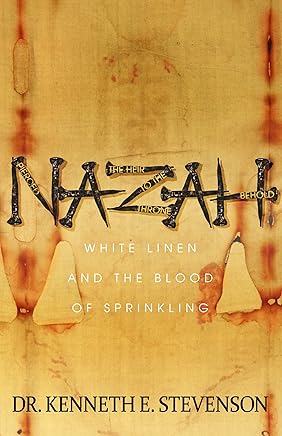
 
Dr. Stevenson's newest book is now available:
NAZAH: White Linen and the Blood of Sprinkling  

Tuesday, May 8, 2018

The Feast of Trumpets and the Return of the Bridegroom

 
The first coming of Jesus fulfilled the spring Feasts of the LORD which are Passover, First Fruits, and Pentecost. These feasts were ordained by the LORD to be a prophetic picture of the Messiah, so Israel would be able to recognize Him when He came. With His second coming, or return, Jesus will fulfil the fall feasts, as well. As there is a spacing of months between the series of spring feasts and fall feasts, there is a spacing of time between His first appearing, and His return. The first fall feast is the Feast of Trumpets. Scripture connects this feast with the resurrection of the dead in Christ, with an event called "The Rapture of the Church", and with Christ's return. First let us see the connection of this feast to these events in scripture:
"Behold, I show you a mystery; We shall not all sleep, but we shall all be changed, in a moment, in the twinkling of an eye, at the last trump: for the trumpet shall sound, and the dead shall be raised incorruptible, and we shall be changed...this corruptible must put on incorruption, and this mortal must put on immortality...then shall be brought to pass the saying that is written, Death is swallowed up in victory...the victory through our Lord, Jesus Christ."   1 Cor. 15:51-57 (excerpt)
"For this we say unto you by the word of the Lord, that we which are alive and remain unto the coming of the Lord shall not prevent them which are asleep. For the Lord himself shall descend from heaven with a shout, with the voice of the archangel, and with the trump of God: and the dead in Christ shall rise first: then we which are alive and remain shall be caught up together with them in the clouds, to meet the Lord in the air: and so shall we ever be with the Lord..."   1 Thess. 4:15-17
At the end of the Feast of Trumpets, there is a last blast of the trumpet, or shofar, called
Teki'ah Gedolah (the Great Blowing), a long blast signaling victory, or good news. This is the last trump, the trump of God, referred to in the above scriptures.
Last week, we spoke about the bridal garment the Jewish bride would prepare for her wedding in order to make herself ready. Similarly, the fine linen, clean and white that the bride of Christ is given to wear for her marriage supper spoken of in Rev. 19:7-9, represents the righteousness of the saints. After the wedding covenant (Ketubah) was signed, the Jewish bride would also prepare woven and embroidered tapestries to beautify her new home with her bridegroom. For the Bride of Christ, the bridal garment, and the beautifully woven tapestries represent the works of  righteousness, the fruits of our faith, as led by the Holy Spirit. Our faith is expected to produce divinely inspired, eternal fruit, or righteous works. These righteous works of faith are described in scripture. They are works that come from holiness, prepared for the holy temple of God, which we are, and to which we are purposed. Our works are built upon the holy foundation which has been built by Christ, and is Christ. Carnality in believers, which produces strife and divisions, creates carnal works that will not survive:
"...every man shall receive his own reward according to his own labor...Every man's work shall be made manifest: for the day shall declare it, because it shall be revealed by fire; and the fire shall try every man's work of what sort it is. If any man's work abide which he hath built thereupon, he shall receive a reward. If any man's work shall be burnt, he shall suffer loss: but he himself shall be saved; yet so as by fire."   1 Cor. 3:8, 13-1
As we see and understand the times and the seasons in which we live, and understand that the Lord is soon to return, that the last trump is soon to sound, we are not to be caught unawares and unprepared (1 Thess. 5:1-6).
Jesus used the parable about the seed and the sower to illustrate the effects of carnality upon the Word that we have received, and the subsequent fruit, or works, that we produce. When we receive the Word, but don't bother to understand its value and therefore treat it carelessly, it is easily taken from us. When we receive the Word but fail to incorporate it into our character, "Yet hath he no root in himself", when tested by tribulation and persecution for the Word's sake, this person becomes offended at the Word that was sown into his life. When we hear the Word, but allow the Word to become choked by the cares of this world, and the "deceitfulness of riches" that we have given the greater importance, we become unfruitful. However, the Word that has been planted into good ground, is so considered because the hearer has made an effort to understand (to set or join together in the mind, to be wise) and join the Word into his life. This hearer of the Word with understanding also bears fruit. The fruit is abundant: "some an hundredfold, some sixty, some thirty". We bring forth fruit that spiritually feeds others, and impacts their lives with salvation (Mt. 13:19-23).
This parable above about the sower is very similar in meaning to the parable Jesus taught about the "talents" given by the master to "every man according to his several ability", who expected a multiplication and return (Mt. 25:14-30). Along with the Word, works have been ordained to us. These works have divine multiplication built into them.
In the telling of this parable, Jesus acknowledged that not all would "understand". That was the purpose of the parable form (Mt. 13:11). We need to be those who hear the word, and understand these mysteries of the kingdom of heaven that are being revealed to us.
Daniel, who wrote of the resurrection that was to come (Dan. 12:2), also spoke of those who are wise and have understanding. He wrote that "they shall shine as the brightness of the firmament" with those "that turn many to righteousness as the stars for ever and ever." (v. 3). Daniel also referred to the Bride of Christ as he wrote:
"Many shall be purified and made white, and tried; but the wicked shall do wickedly: and none of the wicked shall understand; but the wise shall understand."  v. 10
Daniel was told by the LORD that what he was writing was to be sealed "till the end". We who have received Christ understand what Daniel was writing about, because it has become "unsealed" for us in this time of the end of the age.
We understand that now is the time to prepare ourselves for our Bridegroom's soon return, including the preparation of those works of righteousness, those fruits of the Word of salvation in our lives, works that will last through the fire of testing and purifying, built upon the holy foundation of Christ:
"Therefore, my beloved brethren, be ye stedfast, unmoveable, always abounding in the work of the Lord, forasmuch as you know that your labour is not in vain in the Lord." 
                                                                                                      1 Cor. 15:58

To Contact/Submit Prayer request/To Support the Ministry/To order "NAZAH""
https://twitter.com/everlastingcov8
http://endtimeschool.com/
To Watch the Complete Message from Dr. Stevenson:
https://www.youtube.com/watch?v=O9Uv3uzpyyQ&feature=youtu.be

Prayer of Salvation for all who desire to receive Jesus as their Savior:

Lord Jesus, open the eyes of my heart. I want to know You as my Lord, and as my Savior, who covers my sins, and cleanses my heart. Come into my heart, and also fill me with the Holy Spirit, who will lead me into all truth, and will teach me how to follow You. I believe that You are the Son of God, the Messiah, that You were crucified for me, and rose from the dead to give me everlasting life. I believe that You are coming again. Lord Jesus, in Your name I believe, pray, and receive all of these things. Amen.


Wednesday, August 30, 2017

Weaving Your Wedding Garment

 
Previously, we discussed the Jewish marriage covenant, or contract, called a Ketubah. Most of the obligations of the contract, which involves financial security for the wife, falls upon the groom to guarantee and fulfill. In Christ's marriage covenant with us, His bride, the same applies. He has guaranteed with His own blood, our eternal security, and our spiritual position seated with Him.
Once the bride accepts the Ketubah marriage contract that the groom proposes, she begins her preparations for the upcoming wedding. These wedding preparations include ritual cleansings, called mikvahs, for the purpose of purity and holiness, and the weaving of her bridal garment. We see this same kind of preparation involved in the marriage of Christ and His Church:
"Husbands, love your wives, even as Christ also loved the church, and gave Himself for it; That He might sanctify and cleanse it with the washing of water by the word, that He might present it to Himself a glorious church, not having spot or wrinkle, or any such thing; but that it should be holy and without blemish."    Eph. 5:26-27
The Hebrew word for bride is "kallah", which means "perfect, complete, the son's wife". The root word, "kalal" is a verb meaning "to complete, to perfect". Both words also include a meaning "to put a crown upon". In Jewish weddings, the bride is very much treated as a queen. There is a transformation that results from the bride's marriage preparations, through which the bride goes from being a betrothed woman, to a wife. According to scripture, this transformation through the joining of marriage, and prophetically speaking, the marriage of the Lamb and His wife, has a wide-ranging effect far beyond the two immediately involved:
"I will greatly rejoice in the LORD, my soul shall be joyful in my God; for He hath clothed me with garments of salvation, He hath covered me with the robe of righteousness, as a bridegroom decketh himself with ornaments, and as a bride adorneth herself with her jewels. For as the earth bringeth forth her bud, and as a garden causeth the things that are sown in it to spring forth; so the LORD God will cause righteousness and praise to spring forth before all the nations."    Isa. 61:10-11
We know this is the Messiah speaking, because Jesus identified Himself as fulfilling the scriptures in His reading of Isaiah 61:1-2a in the synagogue (Lk. 4:18). This is the same voice speaking throughout this section of scripture. All of the nations will be changed as the Bride and her Savior Groom are joined together in the wedding. The marriage is immediately connected with the return and reign of Messiah on earth. We can understand the great rejoicing connected with this event when we see the resulting transformation in the land:
"...the Gentiles shall see thy righteousness, and all kings thy glory: and thou shalt be called by a new name, which the mouth of the LORD shall name. Thou shalt also be a crown of glory...and a royal diadem in the hand of thy God. Thou shalt no more be termed Forsaken; neither shall thy land any more be termed Desolate: but thou shalt be called Hephzibah ("My delight is in her"), and thy land Beulah ("married, married wife, husband"): for the LORD delighteth in thee, and thy land shall be married. For as a young man marrieth a virgin, so shall thy sons marry thee: and as the bridegroom rejoiceth over the bride, so shall thy God rejoice over thee."   Isa. 62:3-5
Restoration and renewal is connected to the marriage between the Bridegroom and the Bride, even as a bride receives a new name from marriage (see also Rev.2:17):
"Thus saith the LORD; Again there shall be heard in this place, which ye say shall be desolate without man and without beast, even in the cities of Judah, and in the streets of Jerusalem, that are desolate, without man, and without inhabitant, and without beast, the voice of joy, and the voice of gladness, the voice of the bridegroom, and the voice of the bride, the voice of them that shall say, "Praise the LORD of hosts: for the LORD is good; for His mercy endureth forever: and of them that shall bring the sacrifice of praise into the house of the LORD. For I will cause to return the captivity of the land as at the first, saith the LORD...In those days, and at that time, will I cause the Branch of righteousness to grow up unto David (referring to Messiah and His rule); and he shall execute judgment and righteousness in the land. In those days Judah shall be saved, and Jerusalem shall dwell safely: and this is the name wherewith she shall be called, "The LORD Our Righteousness".  Jer. 33: 10-11, 15-16
Surprisingly, not everyone who is called to this great wedding that will lead to the return of Messiah, and to the transformation of the nations, will be willing to attend. Jesus tells a parable of a king who desires to give a marriage celebration for his son (Mt. 22:1-14). Many refused to come, some refusing with violence, because they preferred to attend to their daily activities instead. Because the guests refused, strangers had to be invited, even compelled, instead. Those who attended, were expected to wear the proper wedding garments. If they did not, they were thrown out of the wedding. The place outside the wedding is a place of outer darkness. Jesus concludes His parable of those who refused to attend the wedding of the king's son by saying, "For many are called, but few are chosen."
For those who are the Bride, the Church, we are expected to prepare for this great upcoming event, and not to be of the same mind as those who refuse (Eph. 4:17-18).
Part of the Jewish marriage tradition is the giving of a gift by the groom to the bride upon the bride's acceptance the Ketubah marriage contract. This gift is called a matan. Jesus, our Bridegroom, also has given gifts to His betrothed Bride, the Church. These gifts also help to prepare us for the marriage to the Lamb. These gifts include apostles, prophets, evangelists, pastors, and teachers (Eph. 4:11-16). These gifts to the Church speak the truth in love that we may all grow into Christ. Their care and teaching leads to the perfecting (see "bride" above) of the saints until we come into the unity of faith, the knowledge of the Son of God, our perfecting leading us to come into the measure of the stature of the fullness (to be complete- see "bride" above)) of Christ. If we refuse these precious gifts from Christ to the Church, we will not have prepared ourselves (Rev. 19:7), not having been properly cleansed, as the betrothed bride should be, and we will not have completed the weaving of our wedding garment, one without spot or wrinkle.

To Contact/Give:
PO Box 155
Christmas, FL. 32709
https://twitter.com/everlastingcov8
http://endtimeschool.com/
PayPal available

To watch the entire message:
https://www.facebook.com/kenneth.e.stevenson/videos/10209865446974650/
 

Wednesday, July 19, 2017

Trumpet Blasts and Wedding Garments: Are You Ready?

 
During the Feast of Trumpets, which is the first of the fall feasts of the LORD, there is a series of repeated blasts of the shofar (trumpet made from a ram's horn) that are specifically associated with this feast.
The first shofar blast of the repeated series is called "Tekiah". It is one long blast. Its sound represents both joy and warning. In our last post, we discussed the joy associated with this feast (Rev. 19:7-9, Ps. 81:1-3). The warning of the Tekiah blast, according to the rabbinical teachings, serves to call attention to something, to gather together to receive God's orders. Jesus issued this Tekiah-like warning:
"And take heed to yourselves, lest at any time your hearts be overcharged with surfeiting (dissipation, carousing), and drunkenness, and the cares of this life, and so that day come upon you unawares. For as a snare it shall come on all them that dwell on the face of the whole earth. Watch ye therefore, and pray always, that ye may be accounted worthy to escape all these things that shall come to pass, and to stand before the Son of man." 
                                                                                              Lk. 21:34-36
The Apostle Paul repeats a similar warning:
"For yourselves know perfectly that the day of the Lord so cometh as a thief in the night. For when they shall say Peace and safety; then sudden destruction cometh upon them, as travail upon a woman with child; and they shall not escape. But ye, brethren, are not in darkness, that that day should overtake you as a thief...Therefore, let us not sleep, as do others; but let us watch and be sober...For God hath not appointed us to wrath, but to obtain salvation by our Lord Jesus Christ."    1 Thess. 5:2-9 (excerpt)
Much of the Church is asleep, unaware, and unprepared. The Tekiah blast is to stir us up, and warn us to start paying attention. Tradition says that the Tekiah blast is shouting, "Awake you sleepers!".
The second series of blasts of the shofar is called "Shevarim". It is comprised of three short, broken notes. The word Shevarim means "breakings". Its sounding calls people to weep, repent, and seek God. The blasts are to lead God's people into examining themselves. They are reminded to turn away from the things that have been separating them from God, and to seek those things that are Godly:
"For the eyes of the Lord are over the righteous, and His ears are open unto their prayers: but the face of the Lord is against them that do evil...But sanctify the Lord God in your hearts: and be ready always to give an answer to every man that asketh you a reason of the hope that is in you with meekness and fear..."   1 Pet. 3:12, 15    and
"Quench not the Spirit...Prove all things;  hold fast that which is good. Abstain from all appearance of evil. And the very God of peace sanctify you wholly; and I pray God your whole spirit and soul and body be preserved blameless unto the coming of our Lord Jesus Christ."                                                               1 Thess. 5:19-23
We are expected to walk in a Godly manner, sanctified, having not even the appearance of evil in our lives. The Shevarim blasts warn us that we are to repent, and change our ways, when we fall short of these things. The pure, white, clean linen of the wedding garments worn by the Bride of Christ represent righteousness (Rev. 19:7-8), for she has prepared herself for her wedding to the Lamb of God. The cares and ways of this world, the things considered valuable and important to this world, are not part of the righteousness of the saints.
The third series of blasts of the shofar is called "Teruah". They are nine, short, staccato blasts of alarm. It is an urgent warning, meant to give advance notice of an immediately impending event. The word Teruah means "shout or cry". It is to bring the hearers into deep repentance, sorrow, and sobbing. To us, it should be our last warning, "The Bridegroom  cometh". At the sounding of these Teruah blasts, there is no time left to "prepare" if we have not already prepared ourselves for this event. The moment is about to come upon us. Jesus gave this serious warning to one of His churches:
"Be watchful, and strengthen the things which remain, that are ready to die: for I have not found thy works perfect before God. Remember, therefore, how thou hast received and heard, and hold fast, and repent. If therefore, thou shalt not watch, I will come on thee as a thief, and thou shalt not know what hour I will come upon thee."  Rev. 3:2-3
To this same church, Jesus gave this promise if they listened to Him, and repented:
"...few...which have not defiled their garments;  and they shall walk with Me in white: for they are worthy. He that overcometh, the same shall be clothed in white raiment; and I will not blot out his name out of the book of life, but I will confess his name before My Father, and before His angels."   Rev. 3:2-5 (excerpt)
The last sounding of the shofar in this series is called "Teruah Gedolah", meaning "the last trump" or "the great trump". It is one long, continuing note to be held as long as the breath allows. It is the trumpet blast of the hope of redemption, and resurrection of the dead:
"For the Lord Himself, shall descend from heaven with a shout, with the voice (also includes the sound or tone of an instrument) of the archangel, and with the trump of God: and the dead in Christ shall rise first: then we which are alive and remain shall be caught up together with them in the clouds, to meet the Lord in the air: and so shall we ever be with the Lord.:   1 Thess. 4:16-17
The moment of resurrection is preceded with sounds. These sounds first speak to those who are "asleep", the dead in Christ, and then also to those living who belong to Him. 
Isaiah is just one prophet who prophesied this moment of resurrection:
"Thy dead men shall live, together with My dead body shall they arise. Awake (awaken abruptly, arise, watch. root- harvest) and sing (sing, shout, cry out, overcome), ye that dwell in dust: for thy dew (night mist. root- overshadow, covering) is as the dew of herbs (light, luminousness. root- "ore" light of Christ), and the earth shall cast out (lie prostrate, prostrate oneself, fall away from, be inferior to) the dead. Come, My people, enter thou into thy chambers, and shut thy doors about thee: hide thyself, as it were, for a little moment, until the indignation be overpast."  Isa. 26:19-20
The dead and the living in Christ are, in an abrupt moment, gathered to Him in resurrection and transformation, to enter into the bridal chamber with Him.
As the trumpets of this feast sound, they are the foreshadowing of the last call and warning for the Bride to make herself ready.

To Give/Contact:
PO Box 155
Christmas, Fl. 32709
https://twitter.com/everlastingcov8
http://everlastingcovenant.wixsite.com/theshroud
http://endtimeschool.com/
PayPal available


Tuesday, July 11, 2017

The Coming Fall Feasts

 
The prophetic shadows and types found in the spring feasts of the LORD were fulfilled in Christ's first coming. The fall feasts are a foreshadowing of Christ's return. It is not only important for the Church to know the significance of these feasts, but it is a blessing to see how God has revealed His prophetic plan through them.
The three fall feasts of the LORD are described in Lev. 23-44. These feasts are The Feast of Trumpets, The Day of Atonement, or Yom Kippur, and the Feast of Tabernacles, Sukkot. Each feast is memorialized by a special Sabbath. There is to be no work done on these days. The Sabbath is a day in which the completed work of God, is to be remembered and held holy. These feasts as well, point us to His plan, and the completion, or fulfillment of that plan.
The first of the fall feasts is the Feast of Trumpets:
"...In the seventh month (Tishrei), in the first day of the month (a new moon), shall ye have a Sabbath, and a memorial of blowing of trumpets, a holy convocation. Ye shall do no servile work therein: but ye shall offer an offering made by fire unto the LORD."   Lev. 23:24-25
This feast can only begin when the new moon is seen in the sky in the month of Tishri. Even though the date of the feast is marked on the calendar, because it can be difficult to spot the new moon, no man can know the precise day, nor hour for the beginning of the feast (see also Mt. 24:36, 50). Once the new moon is spotted in the sky, the signal is given, the shout goes up, and the trumpets, or shofars, begin to sound all throughout the land ( Listen here ).
It is a feast of shouting, sounding, and rejoicing:
"Sing aloud unto God our strength: make a joyful noise unto the God of Jacob...Blow up the trumpet in the new moon, in the time appointed, on our solemn feast day."  Ps. 81:1, 3
The above Psalm was written by Asaph, whose name means "to gather, to collect, receive, remove, to gather and take away, to receive into". His Psalms should remind us of the great gathering in of harvest that the LORD has planned. Could that "gathering in", that "taking away" be associated with the Feast of Trumpets? Let's read on.
The Apostle Paul talks about a similar event in 1Thess. 4:1-18, and 5:1-6, 12-18. He begins by speaking that we are to know how to possess our vessel (body) in sanctification and honor. God has not called us unto uncleanness, but to holiness. We are to love and honor God with our behavior, and to act with honor and love towards one another. This is to fulfill the commandments of Christ (Mt. 22:36-40). Paul goes on to say that we should not be ignorant.:
"For the Lord Himself shall descend from heaven with a shout, with the voice of the archangel, and with the trump of God: and  the dead in Christ shall rise first: Then we which are alive and remain shall be caught up together with them in the clouds, to meet the Lord in the air: and so shall we ever be with the Lord."  (see also Jn. 14:2-3) 1 Thes. 4:16-17
We are to be aware of the times and the seasons so that this day should not overtake us unaware, like a thief, as those who do not know God. He concludes by warning:
"Therefore let us not sleep, as do others;  but let us watch and be sober...Rejoice evermore, pray without ceasing, in every thing give thanks." 1 Thes. 5:6,16-18
A similar warning is given by Christ in a parable about the sudden coming of the Bridegroom  in Mt. 25:1-13. Ten virgins had been sleeping when the shout comes, "Behold the bridegroom cometh; go ye out to meet Him." (v. 6). Some, who are wise, are prepared to go out to the bridegroom immediately, but some who are unwise have been careless and negligent, and therefore, unprepared. By the time these unwise, careless virgins are ready, the bridegroom has already left. But "...they that were ready went in with him to the marriage: and the door was shut."  (v. 10). The Lord concludes by warning:
"Watch therefore, for ye know neither the day nor the hour when the Son of man cometh."  (v. 13).
The above parable about the coming of the Bridegroom warns us to be prepared and ready for that sudden appearing. The Apostle Paul warns above about preparing ourselves in holiness and honor, adding that a shout and a trump will signal our gathering away to be with the Lord. Also, Rev. 19:7 proclaims that "the marriage of the Lamb is come, and His wife hath made herself ready."  Being ready is necessary for this event. This occasion is also accompanied by gladness and rejoicing, as the Psalmist declared.
Being ready, or prepared, is also part of the prophetic pattern of the Feast of Trumpets. Before the Feast of Trumpets begins in the month of Tishrei, the preceding month of Elul is considered a month of "teshuvah", or repentance, in order to prepare, and be ready for the coming feast. Not only do the worshippers prepare their souls, but they also spend the month before the feast preparing the garments they will wear for the Feast of Trumpets. According to the traditional observance, the garments of this feast must be clean, white linen, without spot or wrinkle. It should come as no surprise to find that the Bride who has made herself ready is further described:
"And to her was granted that she should be arrayed in fine linen, clean and white: for the fine linen is the righteousness of the saints."  Rev. 19:8
And Paul also uses similar words to describe the Church:
"That He might present it to Himself, a glorious church, not having spot or wrinkle, or any such thing; but that it should be holy, and without blemish."  Eph. 5:27
The preparation month of Elul will soon be here, and then Tishrei will begin with the Feast of Trumpets. We do not know which year the prophetic shadow of the Feast of Trumpets that we have described above will be fulfilled, but we know the signs of the times tell us that it is near, at any moment. We are called to be among those who are not ignorant, and not in darkness, but aware, awake, prepared, and ready when the shout goes out, and the trumpet sounds, to be gathered in, to go into the marriage supper of the Lamb.
 
To Contact/Give:
PO Box 155
Christmas, Fl. 32709
PayPal available


Wednesday, September 21, 2016

Understanding Last Days Prophecies

 
It is very important that the church read, know, and understand the prophecies of the Bible, particularly those that deal with the Last Days, which definitely apply to the time in which we now live.The LORD meant for us to know and understand these things, because not knowing them will mean our destruction. The LORD said to the prophet Hosea, "My people are destroyed for lack of knowledge, because thou hast rejected knowledge, I will also reject thee..."      Hos. 4:6
The prophet Hosea ministered in a time when Israel and Judah were prospering, but they were morally and spiritually bankrupt. They had turned from God, placed their trust in kings and riches, and worshipped idols, including Ba'al. Even the priesthood had become infected with this idolatry. The LORD said, "...thou shalt be no priest to Me: seeing thou hast forgotten the law of thy God, I will also forget thy children. As they were increased, so they sinned against Me: therefore will I change their glory into shame."  Hos. 4:6-7 
God's priests and people had exchanged the condition of His glory for the shame of sin and idolatry. The LORD told His prophet that the spirit of whoredoms was in the midst of them (Hos. 5:4). They had abandoned their Husband, God, to chase after idols.
We find the condition of our society today, including the church, to be similar to that of Israel and Judah in the time of Hosea. We also are rich, and we also have rejected the knowledge of the LORD, and we now find ourselves being destroyed as a result. We choose instead, abominations, and the spirit of whoredoms. We rely upon electing politicians who also have no knowledge of the Word, nor the Spirit of God, or choose to ignore them. As a nation, we have exchanged the glory of our founding upon the principles of God's Word, for shame.
 

Hosea calls the people of God to return to Him:
"Come and let us return unto the LORD: for He hath torn, and He will heal us; He hath smitten, and He will bind us up. After two days, He will revive us: in the third day, He will raise us up, and we shall live in His sight. Then we shall know, if we follow on to know the LORD: His going forth is prepared as the morning; and He shall come unto us as the rain, as the latter and former rain unto the earth."  Hos. 6:1-3
The LORD tells Hosea above, of revival and the resurrection of the third day. Not only does this merciful resurrection refer to Christ's resurrection on the third day, but Peter tells us that each day of the LORD is as a thousand years (2 Pet. 3:8). This brings us to the very threshold of that third day today. The signs and events of our times also confirm the nearness of that third day resurrection, which includes the rapture, or catching away, of those in Christ who remain alive at that time. We are expected to have knowledge of these precious prophetic promises.
 
This prophetic Word is the very testimony of Jesus, who is the spirit of prophecy (Rev. 19:10). This same testimony of Jesus tells His Bride to make herself ready for the marriage of the Lamb has come (Rev. 19:7).
Those who keep the knowledge of the prophetic word are blessed (Rev. 22:7). The prophetic word, the testimony of Jesus, tells us to keep this prophetic word, and "worship God... for the time is at hand."  (Rev. 22:9-10). "And behold, I come quickly; and My reward is with Me, to give every man according as his work shall be." Rev. 22:12
Those who do not know these Last Days prophecies, or do not receive their urgency, will not have made themselves ready:
"He that is unjust, let him be unjust still: and he which is filthy, let him be filthy still: and he that is righteous, let him be righteous still: and he that is holy, let him be holy still." 
                                                                                                   Rev. 22:11
The thing that adds to the urgency and imminence of these Last Days prophecies is the fact that as the moment draws nearer, the days will even be shortened for the elect's sake, otherwise, no flesh would be saved. The accelerated progression of lawlessness and lies will be such that even the elect will be deceived unless those days are shortened (Mt. 24:22-24, Mk. 13:20). Because of these things, none of us can afford to be complacent, or relaxed in attitude towards these prophecies.
According to scripture, Israel's attitude as Hosea's prophecies came to pass would be, "My God, we know Thee". God denies this responding, "Israel hath cast off the thing that is good: the enemy shall pursue him. They have set up kings, but not by Me: they have made princes, and I knew it not: of their silver and their gold have they made them idols, that they may be cut off...For Israel hath forgotten his Maker." Hos. 8:2-4, 14
These are like the words of Jesus in Mt. 7:22-23:
"Many will say to Me in that day, Lord, Lord, have we not prophesied in Thy name? and in Thy name have cast out devils? and in Thy name done many wonderful works? And then will I profess unto them, I never knew you: depart from Me ye that work iniquity."
Much of the church feels that they know, and are part of Jesus, ministering in His name. However, as we leave His Word and His truth behind, choosing sin, worldly comfort and compromise instead, will Jesus say to us that He never knew us? Will the Father say that the choices we made, and the works that we did, had nothing of Him in them?
Hosea calls the people of God back to Him again:
"O Israel, return unto the LORD Thy God; for thou hast fallen by thine iniquity. Take with you words, and turn to the LORD: say unto Him, Take away all iniquity, and receive us graciously: so we will render the calves of our lips."     Hos. 14:1-2
God answers,
"I will heal their backsliding, I will love them freely: for Mine anger is turned away from him. I will be as the dew unto Israel: he shall grow as the lily, and cast forth his roots as Lebanon. His branches shall spread, and his beauty shall be as the olive tree, and his smell as Lebanon. They that dwell under His shadow shall return; they shall revive as the corn, and grow as the vine: the sent thereof shall be as the wine of Lebanon."     Hos. 14:4-7
"And I will make them one nation...and one king (Messiah) shall be king to them all..Neither shall they defile themselves anymore with their idols, nor with their detestable things, nor with any of their transgressions: but I will save them out of all their dwelling places...and will cleanse them: so shall they be My people, and I will be their God....David my servant (Messiah) shall be king over them...they all shall have one shepherd: they shall walk in My judgments, and observe My statutes, and do them...and My servant David shall be their prince forever....I will make a covenant of peace with them...an everlasting covenant...and will set My sanctuary in the midst of them for evermore. My tabernacle also shall be with them...I will be their God, and they shall be My people...and the heathen shall know...when My sanctuary shall be in the midst of them for evermore."   Ez. 37:23-28 Excerpt
Not only will God hear their sincere cries to Him, and heal them, but He also blesses them, and confirms His promise of Messiah to them.
Return unto the LORD. Time is short, and the call of the Last Days prophecies goes out, and those who know the prophecies will answer and be saved from destruction.
 
*photo top of page: the prophet Hosea