Showing posts with label Passover. Show all posts
Showing posts with label Passover. Show all posts
Tuesday, March 28, 2023
The Missed Passover Connection*
Passover is approaching in a few days. John the Baptist identified Jesus directly with the Passover by saying, "Behold the Lamb of God, which taketh away the sin of the world." (Jn. 1:29, 36). He also identified Jesus as the Son of God (v. 34). Jesus said clearly that He was the bread that comes from heaven, that when eaten, brings eternal life: "Verily, verily, I say unto you, Moses gave you not that bread from heaven; but my Father giveth you the true bread from heaven. For the bread of God is he which cometh down from heaven, and giveth life unto the world." The crowd wanted that bread, and asked Jesus to give it to them. Jesus answered: "I am the bread of life: he that cometh to me shall never hunger; and he that believeth on me shall never thirst...and this is the will of him (meaning the Father) that sent me, that every one which seeth the Son, and believeth on him, may have everlasting life: and I will raise him up at the last day." (Jn. 6:30-40, excerpt). Resurrection is the core of our Christian faith. We will see later on that Jesus connects this bread of resurrection with the Passover bread. While still slaves in Egypt, Passover also delivered from the power of death the Israelites who had obediently applied the blood of the lamb to their doorposts and lintels as Moses had commanded them from God. The Jews who were listening to Jesus, however, had trouble accepting the comment that He had come down from heaven. They knew His birth family, they reasoned, so how could He have come down from heaven? They were missing the Passover connection through unbelief. Jesus, knowing their murmurings said, "No man can come to me except the Father which hath sent me draw him: and I will raise him up on the last day. It is written in the prophets, And they shall all be taught of God (see Isa. 54:13-14, Jer. 31:33-34). Every man therefore that hath heard, and hath learned of the Father, cometh unto me...Verily, verily, I say unto you, he that believeth on me hath everlasting life...that a man may eat thereof and not die." In the wilderness, the Israelites ate the manna that God had miraculously given to them, but they did eventually die. This bread, however, of which Jesus spoke, if a man ate of it, he would not die (Jn. 6:41-50). Then Jesus revealed the nature of this bread of eternal life come down from heaven: "I am the living bread which came down from heaven: if any man eat of this bread, he shall live for ever: and the bread that I will give is my flesh, which I will give for the life of theworld...Verily, verily, I say unto you, Except ye eat the flesh of the Son of man, and drink his blood, ye have no life in you."" (v.51-53). Those listening were repulsed by the idea of eating this Man's flesh, and drinking His blood, as they received this with their natural understanding, rather than by the Spirit (v. 63), and being "taught of God", as Jesus had mentioned. These were the same people who had witnessed Jesus multiply the fish and the bread to feed thousands, and had travelled around the Sea of Galilee to follow Him. Now He was telling them about the living bread of everlasting life, and they couldn't accept it. Jesus had also told them that His flesh as the living bread was given for the life of the world. He repeated again the truth of the living bread of His flesh, and His blood, sent by the Father, given for them: "...he that eateth me, even he shall live by me." (v. 54-59). Many who had been His disciples up to this point, could no longer walk with Jesus because of this revelation. Only the twelve, including the betrayer, Judas, continued with Jesus. When Jesus remarked on this, Peter said, "...Lord, to whom shall we go? thou hast the words of eternal life." (v. 60-71). Jesus Himself connected this living bread of eternal life, which was His own flesh, with the Passover. The Lord was sharing the Passover meal with His disciples (Mt. 26:17-18), and He took the two main elements from that meal: "And as they were eating, Jesus took the bread, and blessed it, and brake it, and gave it to the disciples, and said, Take, eat; this is my body. And he took the cup, and gave thanks, and gave it to them, saying, Drink ye all of it; for this is my blood of the new testament, which is shed for many for the remission of sins." (Mt. 26:26-28). The account of this same Passover event in Luke 22 tells us that the cup that Jesus took was the cup after supper (Lk. 22:20). This cup, taken after the Passover supper, has special significance here because it is called "the cup of redemption" by those who observe the Passover. Jesus also said that He would not partake of the wine again until He drinks it new with them in His Father's kingdom. Jesus knew that this would be His last Passover on earth, and be the night of His arrest, and then death (see Lk. 22:7), and that His betrayer was at the table with Him at that moment, and about to act (v. 21-25, see also Mk. 14:22-25). Jesus said that He would not be shedding that blood of the new testament for few, but for many, even in fact for the world - those who believe and have partaken of the Passover connection. He also revealed by this statement that we will be keeping the Passover with Him in His reign as King. When the Passover was first given to Israel by Moses for their deliverance from the last plague of death, they were told to select a male lamb without blemish (Ex. 12:5): "And thus shall ye eat it; with your loins girded, your shoes on your feet, and your staff in your hand; and ye shall eat it in haste: it is the LORD's passover...And this day shall be unto you for a memorial; and you shall keep it a feast to the LORD throughout your generations; you shall keep it a feast by an ordinance for ever." (v. 11, 14, also see Num. 9). The Hebrew word used here for "it", referring to the Passover and the lamb, has the root word made up of the Hebrew letters aleph, tav, which are the first and last letters of the Hebrew alphabet. In the Book of Revelation, Jesus referred to Himself as "The Aleph Tav", or "the Alpha and the Omega" when translated into the Greek. In the verses from Exodus and Numbers, a third Hebrew letter, the vaw, has been added to make up the word "it". This is the same spelling as used for the word meaning "sign", and the individual meanings of the three letters together mean "God nailed to the cross". This word is also used in Isa. 7:10-14, when the king is ordered to ask God for a "sign". The LORD provided the prophetic sign Himself in that passage in the form of a prophetic promise of a virgin giving birth to a son, and the child's name being called Immanuel, meaning "God with us". The aleph-tav sign of Passover, "God nailed to the cross", is to be a guide to the Church. Paul wrote to the church of Corinth for overlooking fornication within its congregation. The nature of the fornication was extreme, and Paul instructed them to turn the offender over to Satan. (The man would later repent and Paul then instructed the church that the man should be accepted back.) Paul warned the church about the tolerance of sin in their midst: "Your glorying is not good. Know ye not that a little leaven (meaning sin) leaveneth the whole lump? Purge out therefore the old leaven, that ye may be a new lump, as ye are unleavened. For even Christ our Passover is sacrificed for us." (1 Cor. 5:1-7). As the church today, like the Corinthian church long ago, ignores the destruction and death caused by sin, they are also missing the Passover connection. Both Jesus and Paul spoke of the Passover connection two thousand years ago. All who have received this truth since then have also received the promise of eternal life. Can anyone afford to ignore this? All believers are called to the wedding supper of the Lamb of God, but don't try to sneak in without your wedding garment, which is eternal life. As Passover approaches, we must examine our lives and remove the leaven, which is sin, while we reflect on Who our Passover is. *Based on Dr. Kenneth E. Stevenson's 3/26/23 message to the church. To contact us, submit a prayer request, give a praise report, or to support this ministry: P.O. Box 154221, Waco, TX, 76705 OR Everlastingcovenant@ymail.com. You can also find us on Facebook, Twitter, theshroudofturin.org, and END TIME SCHOOL, also on Facebook. You can also get a free ebook titled "The Shroud of Turin- A Perfect Summary" at www.TheShroudofTurin.org/freebook.

Thursday, April 1, 2021
Passover 2021*
The arbitrary decision to separate Passover from its relevance to Christ's death and resurrection was made by men in the early history of the Church. However, this was never so in scripture, or in the prophetic and powerful redemption plan of God. Passover, a commanded Feast of the LORD, clearly exemplifies Jesus Christ as the Lamb who shed His blood to cover us, as the lamb's blood covered and protected the Hebrew slaves' households from the judgment of death that plagued Egypt.
The account of Passover is told in Exodus 12. Moses was told by the LORD what the Israelites must do to survive the final plague that was about to spread through Egypt. It would be this last plague, the death of the firstborn, that would finally convince Pharaoh to let the people of God go. God instructs that each household, on the tenth day of the month, is to choose a year old lamb from their flock that is without blemish. They are to keep the lamb for four dqys, and on the fourteenth day, they are to kill it. Each household must use a hyssop branch to strike the doorposts and lintels of their homes with the blood of the lamb (which would make the shape of a cross on the front of their homes). They must roast and eat the lamb and unleavened bread wearing their outer garments, with their shoes on their feet, and their staffs in their hands, ready to make a hasty departure. The LORD then said, "It is the LORD's Passover. For I will pass through the land of Egypt this night, and will smite all the firstborn in the land of Egypt, both man and beast; and against all the gods of Egypt I will execute judgment: I am the LORD. And the blood shall be to you for a token upon the houses where you are: and when I see the blood, I will pass over you, and the plague shall not be upon you to destroy you, when I smite the land of Egypt." (Ex. 12:11-13).
The LORD also commanded the Israelites that they are to keep a remembrnce of this Passover forever: "And this day shall be unto you for a memorial; and you shall keep it a feast to the LORD throughout your generations; you shall keep it a feast by an ordinance for ever." (v. 14, see also v. 17, v. 24,).
Pssover is not a feast of Israel. It is the Feast of the LORD, to be kept by each generation. We can see the fulfillment of Passover as John the Baptist identified Jesus as the Messiah: "The next day, John seeth Jesus coming unto him, and saith, Behold the Lamb of God, which taketh away the sins of the world." (Jn. 1:29, 35-36). The gospel recorded John the Baptists's testimony of Christ: "I saw the Spirit descending from heaven like a dove, and it abode upon him. And I knew him not: but he that sent me to baptize with water, the same said unto me, Upon whom thou shalt see the Spirit descending, and remaining on him, the same is he which baptizeth with the Holy Ghost. And I saw, and bare record that this is the Son of God." (v. 31-34). John identified Jesus as the Lamb of God, and as the Son of God.
The Book of Revelation continually refers to Jesus as the Lamb. It one exmple, it says, "And all that dwell upon the earth shall worship him (the beast/antichrist), whose names are not written in the book of life of the Lamb slain from the foundation of the world." (Rev. 13:8). It is revealed here that Jesus was the Lamb slain from the foundation of the world. As the Lamb, Jesus is found in the Hebrew opening words of the Book of Genesis: Barashiet Elohim aleph-tav..., translated in our Bibles as "In the beginning, God...". "Bareshiet" in ancient pictographic Hebrew letters means "Behold the hand, behold the nail". In Revelation, Jesus refers to Himself as the "aleph-tav". From the Greek, we read it as "Alpha and Omega": "I am Alpha and Omega, the beginning and the ending, saith the Lord, which is, and which was, and which is to come, the Almighty." (Rev. 1:8, see also, 1:11, 22:13). As the prophet Isaiah described the Redeemer of Israel, he wrote: "Hearken unto me, O Jacob, and Israel my called; I am he; I am the first, I also am the last (see Rev. 1:11). Mine hand also hath laid the foundation of the earth, and my right hand hath spanned the heavens: when I call unto them, they stand up together." (Isa. 48:12-13).
As we can see, although the Lord made Himself as a Lamb, and gave Himself into the hands of men, scripture identifies Him as the Aleph-Tav, the Alpha and Omega, the First and the Last, the One who laid the foundation of the earth. He is the "I AM" who identified Himself to Moses. Isaiah wrote: "Therefore my people shall know my name: therefore they shall know in that day that I am he that doth speak: behold, it is I." (Isa. 52:6). It is this same I AM who brings forth good tidings and proclaims salvation (v. 7). "The LORD hath made bare his holy arm in the eyes of all nations; and all the ends of the earth shall see the salvation of our God." (V. 10).
Before He was lifted up on the cross, scripture prophesied of the Lamb, Jesus, "Behold, my servant shall deal prudently, he shall be exalted and extolled, and be very high. As many were astonied at thee; his visage was so marred more than any man, and his form more than the sons of men. So shall he sprinkle (nazah- to sprinkle (the blood of expiation), to startle) many nations; the kings shall shut their mouths at him: for that which had not been told them shall they see; and that which they had not heard shall they consider. Who hath believed our report? and to whom is the arm (meaning: power, strength, arm or forearm stretched out, shoulder (of animal sacrificed), son of "arm"; Root: sow/sower, produce, yielding seed, conceive) of the LORD revealed? (Isa. 52:13-15, 53:1).
The sacrifice of the Passover lamb in the temple, and the death of Jesus on the cross occurred at the same time of day on that Passover: "Behold, the Lamb of God, which taketh away the sin of the world."
*Based upon Dr. Kenneth E. Stevenson's 3/28/21 message to the church.
To contact: PO Box 154221, Waco, TX 76705 OR Everlastingcovenant@ymail.com
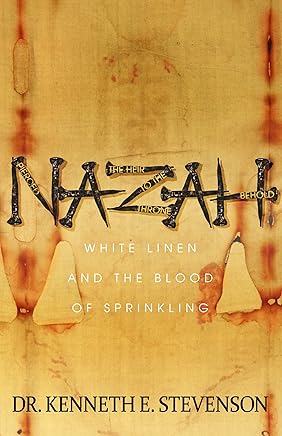
Recommended: Dr. Stevenson's new book: "NAZAH: White Linen and the Blood of Sprinkling"
Find us on Facebook, Twitter, and endtimesschool.com
Monday, March 15, 2021
Removing All Sin From the House*
As Passover approaches, it is the custom in Jewish households to carefully search for and remove all leaven from the house. The apostle Paul pointed out the connection between this Passover custom and our faith, between leaven and sin, as we will read. During this season in which Passover and Resurrection Sunday converge, each of us in the church should be examining our own lives for spiritual "leaven", and removing it: "Thou son of man, shew the house to the house of Israel, that they may be ashamed of their iniquities: and let them measure the pattern. And if they be ashamed of all that they have done, shew them the form of the house, and the fashion thereof, and the goings out thereof, and all the ordinances thereof, and all the forms thereof, and all the laws thereof: and write it in their sight, that they may keep the whole form thereof, and all the ordinances thereof, and do them. This is the law of the house; Upon the top of the mountain the whole limit thereof roundabout shall be most holy. Behold, this is the law of the house." (Ezek. 43:10-12). The prophet Isaiah also wrote about the house of God, that in the last days, "the mountain of the LORD's house shall be established in the top of the mountains, and shall be exalted above the hills; and all nations shall flow into it". The place of the house of God is established in the highest place. Jesus said that our light is not to be hidden under a bushel, but placed upon a lampstand and lifted up high, that all people may be drawn to it.
Early in church history, the fathers of the church made the decision to separate the church from its Jewish foundation, which was a foundation that the LORD laid, not man. Ethnic and racial hatred had much to do with this decision, and as a result, the church is now put into the position of trying to re-establish truths that were lost, and dealing with falsehoods that replaced those truths. In Ezekiel's prophecy, the house of God must be shown the sins and iniquities within it, and conform themselves to the pattern of the house of God.
In Romans, Paul wrote: "Therefore by the deeds of the law there shall no flesh be justified in his (God's) sight: for by the law is the knowledge of sin. But now the righteousness of God without the law is manifested, being witnessed by the law and the prophets; Even the righteousness of God which is by faith of Jesus Christ unto all them that believe: for there is no difference: For all have sinned and come short of the glory of God; being justified freely by his grace through the redemption that is in Christ Jesus: whom God hath set forth to be a propitiation (meaning the blood of sprinkling for the remission of sins) through faith in his blood, to declare his righteousness for the remission of sins that are past, through the forebearance of God..." (Rom. 3:20-25). Written in these verses is the truth of the sin of all that by faith is covered by the sprinkling of the blood of Christ for all who believe. This is the Gospel message. All have sinned, but the grace and righteousness of God has been extended to us in the blood of sprinkling of His Son, Jesus. This is also the message of the Passover, as Paul explains: "Your glorying is not good. Know ye not that a little leaven leaveneth the whole lump? Purge out therefore the old leaven, that ye may be a new lump, as ye are unleavened. For even Christ our Passover is sacrificed for us: Therefore let us keep the feast, not with old leaven, neither with the leaven of malice and wickedness; but with the unleavened bread of sincerity and truth." (1 Cor. 5:6-8). Paul not only urges us to observe the Passover feast, but with the understanding of Christ as our Passover Lamb. He directly associates the practice of ridding the house of leaven with the ridding from our lives of sin.
Isaiah also prophesied about the Messiah Who was slain like a lamb: "...he is brought as a lamb to the slaughter, and as a sheep before her shearers is dumb, so he openeth not his mouth." (Isa. 53:7). This was done to Him because: "All we like sheep have gone astray; we have turned every one to his own way; and the LORD hath laid on him the iniquity of us all." (v. 6). None of us are righteous from our own efforts, but only by the sprinkling of Christ's sacrificial blood for us.
Writing about straying from the words of Jesus, and from the doctrine which is according to godliness, Paul warned about words of arguments, strife and debate that come from pride. It is corrupt minds that produce perverse disputings, and the desire for riches, incorrectly associating riches with godliness. He mentions a problem for many in the church, and in the world: the love of money. He said, "For the love of money is the root of all evil: which while some coveted after, they have erred from the faith, and pierced themselves through with many sorrows." (1 Tim. 6:3-10). Do we differentiate among men based upon their affluence or poverty, esteeming the rich over the poor? Money is not evil, but the love of money leads to all evil. We live in a time when wealth is hoarded and increased among a tiny few, while many are suffering terrible financial hardship, especially during the pandemic. Do we allow money to sway us from the doctrine of godliness, and to have a strong influence over our lives? This is the love of money.
Jesus spoke to His disciples about many things that men would experience in the time before His return. These things were to be signs to us of His coming and the end of the age. Among these signs was racial and ethnic hatred - wars: nation (ethnos) against nation (ethnos), kingdom against kingdom. He also said that along with this, there it would be famines, pestilences, and earthquakes (Mt. 24:6-7). Ethnic and racial hatred and bias should not be allowed in the church, or in our hearts. Revelation tells us that the Kingdom of God is made up of people out of every nation, tribe, kindred and tongue. Acts 17:26 says that God made all nations of men on earth from one blood. Racial conflicts and issues have been in the news lately. What has been our personal reaction to them? Innocent people of various racial minorities have been assaulted and killed, but have we, in our hearts, reasoned them to have been guilty of something? The command of God is that the Gospel of grace through Christ is to be preached in all the world, unto all nations, not just to a preferred few (Mt. 24:14). It is time to search ourselves for the leaven of racism and remove it, for we too will be hated for no other reason than our faith in Christ (Mt. 24:9).
Isaiah wrote the challenge of God to those who would consider themselves to be godly. This is what God was seeing in the hearts of His people: a vain religious appearance rather than authentic faith, understanding, and desire for Him, strife and debate, smiting with a fist of wickedness (Isa. 58:4). On the other hand, this is God's standard, and His expectations of us: to loose the bands of wickedness, to undo the heavy burdens, to let the oppressed go free, to break every yoke, to give bread to the hungry, to bring the homeless poor into our own homes, to cover the naked, to take awsy the pointing of an accusing finger at others, to stop speaking vain things (v. 6-7,9). If we will do these things, the LORD promises that His light and His glory will break forth upon us. "And the LORD shall guide thee continually, and satisfy thy soul in drought...thou shalt be like a watered garden, and like a spring of water, whose waters fail not." (v. 8,11). Not only will we experience this, but we will affect future generations: "And they that shall be of thee shall build the old waste places: thou shalt raise up the foundations of many generations; and thou shalt be called, The repairer of the breach, The restorer of paths to dwell in." (v. 12). For those who remember His Sabbath, and keep it holy, doing His will..."they shall ride upon the high places of the earth" (v. 13-14). In the previous and continuing separation of the church from its Jewish foundation, we have lost the understanding of the Sabbath of the LORD, and we have changed it into something that no longer resembles the original powerful truth. It is yet another cost that came out of the sinful racial attitudes of our hearts. In more recent church history, a new church movement, founded out of a great spiritual revival in Azusa Street, Los Angeles, became divided based upon racial lines. The pastor of the Azusa Street church which first saw revival was a black man, William Seymour. His place of leadership in the movement was rejected by those who were white because of his race.
Soon comes Passover and Resurrection Sunday. Search your heart for any and all leaven, even the hidden leaven, and remove it. It is an essential part of the Bride making herself ready (Rev. 19:7-8).
*Based upon Dr. Kenneth E. Stevenson's 3/14/21 message to the church.
To contact: Everlastingcovenant@ymail.com, or PO Box 154221, Waco, TX 76705
Look for us on Facebook, Twitter, and endtimesschool.com
Wednesday, March 10, 2021
Understanding the Root and Not the Symptoms*
Passover is twenty days away, and eight days later, is Resurrection Sunday. Seldom are these two important days so close together. The divine congruence of these two holy days this year, should cause the Church to prepare themselves in a special way. These days should bring to mind the Lamb of God who takes away the sin of the world, and His resurrection from the dead.
Much of what we see in the world today is very concerning. However, we need to understand that those things we are seeing are the symptoms of a much deeper root problem. That root problem is sin, and it applies to us all: "The fool hath said in his heart, There is no God. Corrupt are they, and have done abominable iniquity: there is none that doeth good. God looked down from heaven upon the children of men, to see if there were any that did understand, that did seek God. Every one of them is gone back, they are altogether become filthy; there is none that doeth good, no, not one."(Ps. 53:1-3). Sin is not someone else's problem, but everyone's problem. The sin nature of man passed from Adam like a gene. If we deny it, we are not dealing with reality, we are only dealing with the symptoms. How deeply is sin imbedded in our nature? The prophet Jeremiah wrote: "Thus saith the LORD; cursed be the man that trusteth in man, and maketh flesh his arm, and whose heart departeth from the LORD...Blessed is the man that trusteth in the LORD, and whose hope the LORD is. For he shall be as a tree planted by the waters...her leaf shall be green; and shall not be careful in the year of drought, neither shall cease from yielding fruit. The heart is deceitful above all things, and desperately wicked: who shall know it." (Jer. 17:5-9). Many in the Church have been trusting in politicians to cure the ills of society rather than the LORD. Many trust in pharmaceuticals to heal us of the latest deadly outbreak. We should keep in mind that the Greek word for sorcerer is pharmakeus. Our hearts convince us that our hope is in man rather than God. Our hearts deceivingly convince us that there is hope in self-help, rather than God. Scripture explains the division between heart and Spirit, and the respective results from each. "This I say then, Walk in the Spirit, and ye shall not fulfill the lust of the flesh...these are contrary the one to the other: so that ye cannot do the things that ye would. But if ye be led of the Spirit, ye are not under the law. Now the works of the flesh are manifest, which are these; Adultery, forniction, uncleanness, lasciviousness, idolatry, witchcraft, hatred, variance, emulations, wrath, strife, seditions, heresies, envyings, murders, drunkenness, revellings, and such like...they which do such things shall not inherit the kingdom of God. But the fruit of the Spirit is love, joy, peace, longsuffering, gentleness, goodness, faith, meekness, temperance,: against such there is no law. And they that are Christ's have crucified the flesh with the affections and lusts. If we live in the Spirit, let us also walk in the Spirit..." (Gal. 5:15-25).
Jesus came under criticism because He did not keep the traditions of men that had become more important to the people than the Word of God. However, the traditions of men would not keep them clean and undefiled. Jesus quoted Isaiah: "This people honoreth me with their lips, but their heart is far from me. Howbeit in vain do they worship me, teaching for doctrines the commandments of men." (Mk. 7:5-9). Jesus continued, "Hearken unto me every one of you, and understand: There is nothing from without a man, that entering into him can defile him: but the things which come out of him, those are they that defile the man..." (v. 14-15). Even His own disciples did not understand this principle, and asked for an explanation. Jesus was surprised that they couldn't understand. He then explained, "That which cometh out of the man, that defileth the man. For from within, out of the heart of men, proceed evil thoughts, adulteries, fornications, murders, thefts, covetousness, wickedness, deceit, lasciviousness, an evil eye, blasphemy, pride, foolishness: all these evil things come from within, and defile the man." (Mk. 7:20-23). As we read above in Jeremiah, Jesus said that it is from the evils of our own hearts that we are defiled.
We often look at the outward appearance in judging whether we and others are righteous. However, Paul wrote that the outward appearance has no importance in the Spirit. The Jews valued physical circumcision as signifying their covenant with God. Paul said, however, "For he is not a Jew, which is one outwardly; neither is that circumcision, which is outward in the flesh: But he is a Jew, which is one inwardly; and circumcision is that of the heart, in the spirit, and not in the letter; whose praise is not of men, but of God." (Rom. 2:28-29). Paul went on to say that whether Jew or Gentile, all are under sin (Rom. 3:9). "As it is written", Paul said quoting the Psalm we read above, "There is none righteous, no not one: There is none that understandeth, there is none that seeketh after God...There is none that doeth good, no, not one...There is no fear of God before their eyes." (v. 10-18).
People who don't fear God will do anything. They will latch onto a lie, like Darwinism, as an excuse not to believe. However, this condition is not without remedy! Paul wrote, "For all have sinned, and come short of the glory of God. Being justified freely by his grace through the redemption that is in Christ Jesus: Whom God hath set forth to be a propitiation through faith in his blood, to declare his righteousness for the remission of sins that are past, through the forbearance of God...that he might be just, and the justifier of him which believeth in Jesus." (v. 23-26).
1 John 1:8 says, "If we say we have no sin, we deceive ourselves, and the truth is not in us." He then writes that if we walk in the light, as God IS light, with no darkness in Him, the blood of His Son, Jesus, will cleanse us of all sin (v. 7). If we confess our sins to Him, "he is faithful and just to forgive us our sins, and to cleanse us from all unrighteousness." (v.9). For Jesus "is the propitiation for our sins: and not for ours only, but also for the sins of the whole world." (1 Jn. 2:2). That word used by both Paul and John regarding Jesus as the "propitiation", refers to the sprinkling of the atoning blood of the sacrifice by the high priest on the mercy seat of God.
Passover is coming soon. Resurrection Sunday follows immediately after. As the Bride, we need to make ourselves ready. We need to deal with the root of the problem, and not just the outward symptoms. And the root of the problem is found within each of our own hearts.
*Based upon Dr. Kenneth E. Stevenson's 3/7/21 message to the Church.
To contact: Everlastingcovenant@ymail.com or P.O. Box 154221
You can also find us on Facebook, Twitter, and endtimesschool.com
Thursday, June 11, 2020
Passover, Communion, and Faith*
The Last Supper from which we receive our communion elements and significance was a Passover Seder that the Lord shared with His disciples on the night He was arrested:
"And he said unto them, With desire I have desired to eat this Passover with you before I suffer: For I say unto you, I will not anymore eat thereof, until it be fulfilled in the kingdom of God." Lk. 22:15-16
He expressed above that it was with great desire that He would share this special Passover Seder with them, because it represented His fulfilled purpose among men:
"And he took bread, and gave thanks, and brake it, and gave unto them, saying, This is my body which is given for you: do this in remembrance of me. Likewise also, the cup after supper, saying, This cup is the new testament in my blood, which is shed for you." v. 19-20
He made a note to point out at this time that even in the revelation of this great redemption miracle, a betrayer, who had been with them from the beginning, one who had witnessed the teachings and the miracles, was sitting there with Him at the table (v. 21). Communion must be received with the same kind of faith as the Israelites required for participating in the first Passover: believing that the blood of the Passover lamb applied to their doorposts and lintels, would protect them from the death that was sent that night. John the Baptist identified Jesus as "the Lamb of God which taketh away the sins of the world" (Jn. 1:29, 36).
Passover is a feast of the LORD given to Israel to be kept throughout all generations to remember the night that the LORD provided the principle truth that the blood of the lamb that would protect them from death, and deliver them from bondage (see Lev. 23:4-8).
As the apostle Paul delivered the revelation of communion that he had directly received from the Lord, it followed exactly what Jesus had said to His disciples (1 Cor. 11:23-25). Paul also reminded the Corinthian church of the attitude with which to come to the Supper of the Lord. As with Passover, above, the Table of the Lord is kept for "remembrance", in faith, of the Lamb of God who was sacrificed for us, and the promises of the new covenant that freed us, not just for a night, not just for a year, but forever. Paul wrote that as we keep the Table of the Lord in this manner, "For as often as ye eat this bread, and drink this cup, ye do shew the Lord's death till he come." (v. 26). Without this remembrance in faith, we are not "shewing the Lord's death till he come", we are eating the bread, and drinking the cup unworthily, without its important spiritual remembrance, thereby being guilty of the blood and body of the Lord (v. 27). All that we do, including the Table of the Lord, we do in faith in His accomplishment, faith in His Word, in Who He is for us. Paul further instructs that we examine ourselves in this very thing. By partaking of the Table of the Lord without this remembrance and appreciation of its meaning, we can bring sickness, death, and even damnation to ourselves (v. 27-30), in the same manner as those who did not trust in the blood of the Passover Lamb in Egypt, and in the same manner as Judas, who did not believe Jesus as the Lamb of God. There is either faith, or unbelief.
In another place, Paul wrote:
"Examine yourselves, whether ye be in the faith; prove your own selves. Know ye not your own selves, how that Jesus Christ is in you, except ye be reprobates (disqualified, not approved)? 2 Cor. 13:5
Unlike man, who looks upon appearances, God looks at the heart, and the heart is deceitful above all things. Because our hearts are so deceitful to us, the Word of God must examine it, as we will see later.
Romans 16:17-18 warns of those who cause divisions, and we see that the Church is deeply divided. Though these dividers are cloaked in the Gospel, they teach contrary doctrines, fooling and deceiving those who are simple, or foolish. They do this for purposes of greed. We see many strange doctrines that have entered the Church- doctrines that twist the scriptures or are outside of the scriptures. Hold on, rather, to the true doctrines which we have been taught. Teach the Word of God that we have received that corrects and reproves any false doctrines of men that would lead us away from truth, and towards destruction. We cannot teach anything that sanctifies what the Lord has called sin. We warn in love instead, because the wages of sin is death, and Christ gave His body and blood to take the sin of the world, to defeat the power of death; not to teach or praise sin, whose bitter fruit, without exception, is death.
The Word of God reveals and weighs unbelief. It discerns the thoughts, even the most hidden thoughts and intents of the heart, like a sword that slices through to reveal the covered depths. Everything is revealed before Him. The purpose of this revealing and discerning of our hearts is to bring God's people into His rest, the same rest that He entered into after His work was completed. It is the rest of faith, and it is entered into only through faith (Heb. 4:9-13):
"Seeing then that we have a great high priest, that is passed into the heavens, Jesus the Son of God, let us hold fast our profession (homologia: to say the same things as, to agree with (the Word of God)." Heb. 4:14
*The above is based upon the 6/7/20 message to the Church from Dr. Kenneth Stevenson.
To Contact/Submit prayer requests/Support the ministry/Order the book, "NAZAH-White Linen and the Blood of Sprinkling", and to help us get out the message, to contribute to the Book of Remembrance for Sean Stevenson:
everlastingcovenant@ymail.com
Dr. Stevenson's newest book is now available:
 Sean Stevenson
To Contact/Submit prayer requests/Support the ministry/Order the book, "NAZAH-White Linen and the Blood of Sprinkling", and to help us get out the message, to contribute to the Book of Remembrance for Sean Stevenson:
Dr. Kenneth Stevenson
P.O. Box 154221
Waco, TX 76705
https://twitter.com/everlastingcov8
http://endtimeschool.com/
P.O. Box 154221
Waco, TX 76705
https://twitter.com/everlastingcov8
http://endtimeschool.com/
everlastingcovenant@ymail.com
To watch/hear Dr. Stevenson's complete message:
https://twitter.com/everlastingcov8
Prayer of Salvation for all who desire to receive Jesus as their Savior: Lord Jesus, I desire to know You, and to know Your salvation. I believe that You died for me, and that You were resurrected for me. Forgive me of my sins. Come into my heart, change me, fill me with Your righteousness. Inscribe my name in the Lamb's book of life. Baptize me in Your Holy Spirit, so that I can learn the truth of Your Word and ways, and be strengthened in my walk all the days of my life. You are the hope of my life, and You are my eternal life. I place my trust in You, Lord, for myself, and my whole household. Use me to do the will of the heavenly Father, Who sent You, in Whose name You came. In Your name, and in thanks and praise I pray, Amen.
https://twitter.com/everlastingcov8
Prayer of Salvation for all who desire to receive Jesus as their Savior: Lord Jesus, I desire to know You, and to know Your salvation. I believe that You died for me, and that You were resurrected for me. Forgive me of my sins. Come into my heart, change me, fill me with Your righteousness. Inscribe my name in the Lamb's book of life. Baptize me in Your Holy Spirit, so that I can learn the truth of Your Word and ways, and be strengthened in my walk all the days of my life. You are the hope of my life, and You are my eternal life. I place my trust in You, Lord, for myself, and my whole household. Use me to do the will of the heavenly Father, Who sent You, in Whose name You came. In Your name, and in thanks and praise I pray, Amen.
Tuesday, April 23, 2019
Resurrection and the Blood of Sprinkling*
This year, Passover and Resurrection coincide on the calendar. Jesus was sharing the Passover Seder with His disciples prior to His arrest, crucifixion, and resurrection. He spoke to them saying, "With desire I have desired to eat this Passover with you before I suffer." (Lk. 22:15). Jesus fulfilled the Passover as the Lamb of God who was slain before the foundations of the world - the Lamb of God who takes away the sins of the world. He was raised from the dead on the Feast of First Fruits, and became the first fruits of our resurrection as we follow after Him.
His shed blood fulfills the "blood of sprinkling" that covers man from the curse, and sanctifies. It is the blood that cries out to God forever. The blood of sprinkling also seals the covenant or testament between God and man, both the old, and the even better new covenant, as we will see.
In all things, God's servant Moses was instructed to follow the pattern of heaven here on earth. On the first Passover, Moses received the command from God that the children of Israel should apply the blood of the lamb on the doorposts and lintels in order to protect their houses against the curse and plague of death that had been released as a result of Pharaoh's own words (Ex. 4:22, Ex. 10:28-29).
The blood formed a mark of the cross around their doors. This blood protected the Israelites from the angel of death, while all of Egypt suffered the death of their first born:
"Through faith he (Moses) kept the Passover, and the sprinkling of blood, lest he that destroyed the firstborn should touch them." Heb. 11:28
Just as the children of Israel were delivered out of Egypt to the meeting at Mt Zion to receive the testament of God by the sprinkling of the blood of the lamb upon their doorpost, we also are delivered by the sprinkling of the blood of Christ to a heavenly testament and meeting place:
"But ye are come unto mount Sion, and unto the city of the living God, the heavenly Jerusalem, and to an innumerable company of angels, to the general assembly, and to the church of the firstborn, which are written in heaven, and to God the judge of all, and to the spirits of just men made perfect, and to Jesus, the mediator of the new covenant, and to the blood of sprinkling, that speaketh better things than that of Abel, see that ye refuseth not him who speaketh: for if they escaped not who refused him that spake on earth, much more shall not we escape, if we turn away from him that speaketh from heaven." Heb. 12:22-25
How does the blood of Jesus speak better things than the blood of Abel? Abel's blood cried out to God for vengeance. Jesus' blood cries out to God for forgiveness.
The voice that spoke from the earthly Mt. Zion shook the earth, but now the voice that speaks from heaven will shake the heavens as well, leaving only those things which cannot be shaken. And the kingdom which we have received cannot be shaken (Heb. 12:26-28).
, Peter wrote (1 Pet. 1:1-5) that the sanctification of the Spirit, and the sprinkling of the blood of Jesus has begotten us again in a living hope by the resurrection of Jesus Christ, "to an inheritance incorruptible, and undefiled, and that fadeth not away, reserved in heaven for you, who are kept by the power of God through faith unto salvation ready to be revealed in the last time."
The priests in the old covenant were sanctified by the blood of sacrifice. Regarding the blood of sanctification under the new covenant, scripture describes the blood of Christ as being even greater than the blood of animals sacrificed under the old covenant:
"For as the blood of bulls and of goats, and the ashes of a heifer sprinkling the unclean, sanctifieth to the purifying of the flesh: How much more shall the blood of Christ, who through the eternal Spirit offered himself without spot to God, purge your conscience from dead works to serve the living God?" Heb. 9:13-14
The Old Testament was sealed by the sacrifice of animals and the sprinkling of blood and water on the book of the words spoken by God, and on all of the people, as well as the tabernacle itself, and all of the vessels of ministry by the principle that without the shedding of blood, there is no remission (of sin). Moses said, "This is the blood of the testament which God hath enjoined unto you." (Heb. 9:18-22, Ex. 24:8). As the blood of animals purged the earthly things established after the pattern of the heavenly things, greater sacrifices than these were necessary to purge the heavenly things (Heb. 9:23). Unlike the earthly priest who entered the holy place with the blood of others, the sacrificed Christ entered into heaven itself, and into the presence of God for us, "but now once in the end of the world hath he appeared to put away sin by the sacrifice of himself." Heb. 9:23-26.
Of His own blood and the sealing of a new testament from God, Jesus said at His Passover meal with His disciples:
"...Drink ye all of it; For this is my blood of the new testament, which is shed for many for the remission of sins." Mt. 26:27-28
The sprinkling of the blood of Jesus sacrificed, and His resurrection, fulfilled the feasts, sanctified us by the remission of our sins, sealed a new testament for us, made us the church of the first fruits as we are resurrected with Him, and has delivered us out of slavery and into the heavenly places with Him as a kingdom that cannot be shaken.
Not only do the scriptures testify of the blood of sprinkling and the resurrection, but we also have evidence before our eyes of Christ's blood of sprinkling from the Shroud of Turin. This physical evidence was prophesied before hand (Isa. 52:15, Isa. 53:1, Zech. 12:10), and made known to, and seen later by the Church, the Ekklesia, both Jew and Gentile (1 Cor. 13:12, Gal. 3:1).
The title of the new book that examines all of this evidence is "NAZAH-White Linen and the Blood of Sprinkling". "NAZAH" means "to sprinkle". Let us not turn away from the voice of the blood of sprinkling that is speaking to us today.
*The above is based upon the 4/21/19 message to the Church from Dr. Kenneth Stevenson.
To Contact/Submit prayer requests/Support the ministry/Order the book, "NAZAH":
https://twitter.com/everlastingcov8
http://endtimeschool.com/
Dr. Stevenson's newest book is now available:
The blood formed a mark of the cross around their doors. This blood protected the Israelites from the angel of death, while all of Egypt suffered the death of their first born:
"Through faith he (Moses) kept the Passover, and the sprinkling of blood, lest he that destroyed the firstborn should touch them." Heb. 11:28
Just as the children of Israel were delivered out of Egypt to the meeting at Mt Zion to receive the testament of God by the sprinkling of the blood of the lamb upon their doorpost, we also are delivered by the sprinkling of the blood of Christ to a heavenly testament and meeting place:
"But ye are come unto mount Sion, and unto the city of the living God, the heavenly Jerusalem, and to an innumerable company of angels, to the general assembly, and to the church of the firstborn, which are written in heaven, and to God the judge of all, and to the spirits of just men made perfect, and to Jesus, the mediator of the new covenant, and to the blood of sprinkling, that speaketh better things than that of Abel, see that ye refuseth not him who speaketh: for if they escaped not who refused him that spake on earth, much more shall not we escape, if we turn away from him that speaketh from heaven." Heb. 12:22-25
How does the blood of Jesus speak better things than the blood of Abel? Abel's blood cried out to God for vengeance. Jesus' blood cries out to God for forgiveness.
The voice that spoke from the earthly Mt. Zion shook the earth, but now the voice that speaks from heaven will shake the heavens as well, leaving only those things which cannot be shaken. And the kingdom which we have received cannot be shaken (Heb. 12:26-28).
, Peter wrote (1 Pet. 1:1-5) that the sanctification of the Spirit, and the sprinkling of the blood of Jesus has begotten us again in a living hope by the resurrection of Jesus Christ, "to an inheritance incorruptible, and undefiled, and that fadeth not away, reserved in heaven for you, who are kept by the power of God through faith unto salvation ready to be revealed in the last time."
The priests in the old covenant were sanctified by the blood of sacrifice. Regarding the blood of sanctification under the new covenant, scripture describes the blood of Christ as being even greater than the blood of animals sacrificed under the old covenant:
"For as the blood of bulls and of goats, and the ashes of a heifer sprinkling the unclean, sanctifieth to the purifying of the flesh: How much more shall the blood of Christ, who through the eternal Spirit offered himself without spot to God, purge your conscience from dead works to serve the living God?" Heb. 9:13-14
The Old Testament was sealed by the sacrifice of animals and the sprinkling of blood and water on the book of the words spoken by God, and on all of the people, as well as the tabernacle itself, and all of the vessels of ministry by the principle that without the shedding of blood, there is no remission (of sin). Moses said, "This is the blood of the testament which God hath enjoined unto you." (Heb. 9:18-22, Ex. 24:8). As the blood of animals purged the earthly things established after the pattern of the heavenly things, greater sacrifices than these were necessary to purge the heavenly things (Heb. 9:23). Unlike the earthly priest who entered the holy place with the blood of others, the sacrificed Christ entered into heaven itself, and into the presence of God for us, "but now once in the end of the world hath he appeared to put away sin by the sacrifice of himself." Heb. 9:23-26.
Of His own blood and the sealing of a new testament from God, Jesus said at His Passover meal with His disciples:
"...Drink ye all of it; For this is my blood of the new testament, which is shed for many for the remission of sins." Mt. 26:27-28
The sprinkling of the blood of Jesus sacrificed, and His resurrection, fulfilled the feasts, sanctified us by the remission of our sins, sealed a new testament for us, made us the church of the first fruits as we are resurrected with Him, and has delivered us out of slavery and into the heavenly places with Him as a kingdom that cannot be shaken.
Not only do the scriptures testify of the blood of sprinkling and the resurrection, but we also have evidence before our eyes of Christ's blood of sprinkling from the Shroud of Turin. This physical evidence was prophesied before hand (Isa. 52:15, Isa. 53:1, Zech. 12:10), and made known to, and seen later by the Church, the Ekklesia, both Jew and Gentile (1 Cor. 13:12, Gal. 3:1).
The title of the new book that examines all of this evidence is "NAZAH-White Linen and the Blood of Sprinkling". "NAZAH" means "to sprinkle". Let us not turn away from the voice of the blood of sprinkling that is speaking to us today.
*The above is based upon the 4/21/19 message to the Church from Dr. Kenneth Stevenson.
https://twitter.com/everlastingcov8
http://endtimeschool.com/
To watch/hear Dr. Stevenson's complete message:
https://twitter.com/everlastingcov8
Prayer of Salvation for all who desire to receive Jesus as their Savior: Lord Jesus, I desire to know You, and to know Your salvation. I believe that You died for me, and that You were resurrected for me. Forgive me of my sins. Come into my heart, change me, fill me with Your righteousness. Inscribe my name in the Lamb's book of life. Baptize me in Your Holy Spirit, so that I can learn the truth of Your Word and ways, and be strengthened in my walk all the days of my life. You are the hope of my life, and You are my eternal life. I place my trust in You, Lord, for myself, and my whole household. Use me to do the will of the heavenly Father, Who sent You, in Whose name You came. In Your name, and in thanks and praise I pray, Amen.
https://twitter.com/everlastingcov8
Prayer of Salvation for all who desire to receive Jesus as their Savior: Lord Jesus, I desire to know You, and to know Your salvation. I believe that You died for me, and that You were resurrected for me. Forgive me of my sins. Come into my heart, change me, fill me with Your righteousness. Inscribe my name in the Lamb's book of life. Baptize me in Your Holy Spirit, so that I can learn the truth of Your Word and ways, and be strengthened in my walk all the days of my life. You are the hope of my life, and You are my eternal life. I place my trust in You, Lord, for myself, and my whole household. Use me to do the will of the heavenly Father, Who sent You, in Whose name You came. In Your name, and in thanks and praise I pray, Amen.
To order "NAZAH": https://twitter.com/everlastingcov8 http://endtimeschool.com/
Monday, April 8, 2019
Repairers of the Breach*
This year, Passover falls on what we now call Good Friday, and the Passover week will include Resurrection Sunday. A breach occurred centuries ago between the Gentiles of the Christian faith, and its Jewish roots. These Jewish roots are a foundation to our relationship with the Messiah, Jesus being the Chief Cornerstone. The Feasts of Israel, both those commanded by the LORD, and the Rabbinical feasts, are observed and taught in the New Testament, as well as the Torah.
This breach between Gentile Christians and Jews is documented back to the Council of Nicaea in 325 AD. The Emperor Constantine, a convert to the Christian faith, urged a complete separation from the Jews and our connection in faith to them. After the reading of a letter from the Emperor, the Council established the separation of "Easter" from Passover. This declaration of separation was a blatant anti-Semitic rant. These words are disturbing to read, but necessary in order to expose the ethnic hatred and scriptural ignorance that were the causes of the breach:
". . .relative to the sacred festival of Easter. . . it was declared to be particularly unworthy for this holiest of all festivals to follow the custom of the Jews. We ought not therefore, to have anything in common with the Jews. We desire to separate ourselves from the detestable company of the Jews..."
With the adaptation of the Nicene Creed, the ekklesia, the called out assembly of God's people, which is translated as "church", was rent in two. The ekklesia is composed of people from every nation, tongue and tribe. It is composed of both Jew and Gentile (Greek). In fact, the Gospel, which is the power of God unto salvation, is for the Jew first, and also to the Greek (Rom. 1:16). The Jews are the natural branches of the tree that grows from the root of our faith. The Gentile believers are unnatural, wild branches that have been grafted into that holy root:
"For I speak to you Gentiles, inasmuch as I am the apostle of the Gentiles...For if the casting away of them (the Jewish branches) be the reconciling of the world, what shall the receiving of them be but life from the dead? For if the first fruit be holy, the lump is also holy: and if the root be holy, so are the branches...For if thou wert cut out of the olive tree which is wild by nature, and wert graffed contrary to nature into a good olive tree: how much more shall these, which be the natural branches, be graffed into their own olive tree? For I would not, brethren, that ye should be ignorant of this mystery, lest ye should be wise in your own conceits; that blindness in part has happened to Israel, until the fullness of the gentiles be come in. And so all Israel shall be saved..." Rom. 11:13-26 (excerpt)
Paul described the Gentiles' feeling of spiritual superiority over the Jew as being "ignorant" regarding God's plan from the beginning. That very willful ignorance can result in those grafted in Gentile branches being cut off from the root! (v. 21-22). When those Jewish natural branches are grafted back into the root of faith which is Christ, as is the stated will of God when He says "All Israel shall be saved", it will mean life from the dead. This is the very miracle of "Easter", the resurrection of Christ, Who is the First Fruits of the resurrection of the dead. The Church chose the unfortunate label of "Easter" to specify the day of Christ's great resurrection victory over death. "Easter" is a form of the name of a vile pagan goddess known as Ashtoreth, or Ishtar, but the obvious misnaming of this holy day is yet another effort to separate from the Jewish and Biblical foundation.
The verses above mention the timing of the grafting back in of Israel as being connected to when "the fullness of the Gentiles be come in". We are seeing that in the events of this generation. Jerusalem, including the Temple Mount, which was trodden of the Gentiles (Lk. 21:24), has once again come into the possession of Israel. This is a sign to us that the fullness of the Gentiles has been accomplished.
The Apostle Paul urges the church of Corinth to observe Passover in its truest meaning:
"Purge out therefore the old leaven, that ye may be a new lump, as ye are unleavened. For even Christ our Passover is sacrificed for us: Therefore let us keep the feast, not with old leaven, neither with the leaven of malice and wickedness; but with the unleavened bread of sincerity and truth." 1 Cor. 5:7-8
Christ is the personification and the prophetic fulfillment of Passover. He is represented in the elements of the Seder meal of Passover. There is no separation between the crucifixion of Christ Who is the Lamb of God, and the Passover.
The Church has also separated itself from the other feasts proclaimed by the LORD, and from the true understanding of the sabbath, when these very things from our Jewish roots of faith testify of Christ.
Our role in this time, as the fullness of the Gentiles has come in, is to mend the breach between the natural Jewish branches and the wild Gentile branches of the tree of faith in Christ- to play our part in the grafting back in of those Jewish branches. Isaiah prophesies this word of the LORD:
"And they that shall be of thee shall build the old waste places: thou shalt raise up the foundations of many generations; and thou shalt be called, The repairer of the breach, The restorer of paths to dwell in...and call the sabbath a delight, the holy of the LORD...Then thou shalt delight thyself in the LORD; and I will cause thee to ride upon the high places of the earth..." Isa. 58:12-14
One way that we have begun this repairing of the breach is through the new book, "NAZAH". This book details the scientific, medical, cultural, and Biblical facts that support the authenticity of the Shroud of Turin as the burial cloth of Jesus Christ, and the physical evidence of His resurrection, and according to the mentions in scripture (1 Cor. 13:12, Gal. 3:1, Isa. 52:13-15). See in "NAZAH" how these scriptures point us to the truth of the Shroud.
"NAZAH" plays a vital role in repairing the breach, and restoring the natural branches into the tree of faith, and the root of Christ.
*The above is based upon the 4/7/19 message to the Church from Dr. Kenneth Stevenson.
To Contact/Submit prayer requests/Support the ministry/Order the book, "NAZAH":
https://twitter.com/everlastingcov8
http://endtimeschool.com/
Dr. Stevenson's newest book is now available:
"And they that shall be of thee shall build the old waste places: thou shalt raise up the foundations of many generations; and thou shalt be called, The repairer of the breach, The restorer of paths to dwell in...and call the sabbath a delight, the holy of the LORD...Then thou shalt delight thyself in the LORD; and I will cause thee to ride upon the high places of the earth..." Isa. 58:12-14
One way that we have begun this repairing of the breach is through the new book, "NAZAH". This book details the scientific, medical, cultural, and Biblical facts that support the authenticity of the Shroud of Turin as the burial cloth of Jesus Christ, and the physical evidence of His resurrection, and according to the mentions in scripture (1 Cor. 13:12, Gal. 3:1, Isa. 52:13-15). See in "NAZAH" how these scriptures point us to the truth of the Shroud.
"NAZAH" plays a vital role in repairing the breach, and restoring the natural branches into the tree of faith, and the root of Christ.
*The above is based upon the 4/7/19 message to the Church from Dr. Kenneth Stevenson.
https://twitter.com/everlastingcov8
http://endtimeschool.com/
To watch/hear Dr. Stevenson's complete message:
https://twitter.com/everlastingcov8
Prayer of Salvation for all who desire to receive Jesus as their Savior: Lord Jesus, I desire to know You, and to know Your salvation. I believe that You died for me, and that You were resurrected for me. Forgive me of my sins. Come into my heart, change me, fill me with Your righteousness. Inscribe my name in the Lamb's book of life. Baptize me in Your Holy Spirit, so that I can learn the truth of Your Word and ways, and be strengthened in my walk all the days of my life. You are the hope of my life, and You are my eternal life. I place my trust in You, Lord, for myself, and my whole household. Use me to do the will of the heavenly Father, Who sent You, in Whose name You came. In Your name, and in thanks and praise I pray, Amen.
https://twitter.com/everlastingcov8
Prayer of Salvation for all who desire to receive Jesus as their Savior: Lord Jesus, I desire to know You, and to know Your salvation. I believe that You died for me, and that You were resurrected for me. Forgive me of my sins. Come into my heart, change me, fill me with Your righteousness. Inscribe my name in the Lamb's book of life. Baptize me in Your Holy Spirit, so that I can learn the truth of Your Word and ways, and be strengthened in my walk all the days of my life. You are the hope of my life, and You are my eternal life. I place my trust in You, Lord, for myself, and my whole household. Use me to do the will of the heavenly Father, Who sent You, in Whose name You came. In Your name, and in thanks and praise I pray, Amen.
To order "NAZAH": https://twitter.com/everlastingcov8 http://endtimeschool.com/
Tuesday, May 23, 2017
Precision Timing, Precision Rehearsal: Pesach
| Examining the Passover Lamb |
We have previously discussed the fact that the seven feasts of the LORD have prophetic significance. The Ekklesia (the called out assembly of God's people) should be aware of their importance. Being "holy convocations", the feasts are "holy rehearsals" for special events connected directly to the Messiah, Jesus. The feasts are part of the example, shadow and pattern of heavenly things shown by God to Moses on the mount (Ex. 25:40, Heb. 8:1-6). So there is a precise pattern to follow for the feasts.
There is also precise timing given for the feasts. There are specific dates given by the command of God for all of them according to the lunar calendar. Part of the creation was manifested for the purpose of precise timing:
"And God said, "Let there be lights (cheerfulness, joy, candlestick, to become light, to shine) in the firmament of heaven to divide the day from the night; and let them be for signs (signal, banner, monument, miracle, distinguishing mark), and for seasons (appointments, fixed times and place of meeting, assemblies, to summon, to betroth), and for days, and years." Gen. 1:14
Fulfilments of prophecy do not happen at just any time, but at the precise timing of God. So it is also with the feasts. Although the Gentile Church, in an effort to separate itself from the Jews and from the Torah, tried to change the timing of the feasts by using the solar calendar instead of the lunar calendar of the Hebrews, God's exact timing prevails. The Ekklesia should be made aware of this precise prophetic timing, and the glory it brings to the Father, Son, and Spirit.
The first of the spring feasts of the LORD is Pesach (Passover), on the 14th day of Nisan. Nisan is considered by God to be the first month of the year. "Nisan" translates from the Hebrew as "their flight". The month of Nisan is associated with deliverance (see Neh. 2:1, Est. 3:7), and Pesach is a feast of deliverance. It marks the event leading to the Israelites' deliverance from slavery in Egypt. They used the blood of a lamb applied around their doors to protect them from the angel of death sent by God to plague Egypt. Following that last plague, the Hebrew slaves were released by Pharaoh.
In this same manner, the blood of the Lamb of God, Jesus, delivered us, and continues to deliver, from the slavery of sin, and death. When the Church continues to separate the crucifixion of Christ from the feast of Pesach, it causes people to miss the incredible details of fulfilment which God precisely timed and set in place to declare to all generations, both Jew and Gentile, His miraculous salvation and deliverance prophesied beforehand through His feast. Let us marvel at some of the prophetically precise details and timing within the feast of Pesach:
Nisan 10-
- The High Priest would travel to Bethany, or Bethlehem, to carefully choose from thousands, the one lamb to be sacrificed for the nation on Pesach.
During this same time, Jesus was in Bethany with the family of Lazarus.
- The High Priest would set apart the lamb he had chosen for the Passover.
Mary anointed, or set apart, Jesus with spikenard.
- The High Priest leads the chosen lamb into Jerusalem, where crowds proclaim and sing from Ps. 118:26, "Blessed be he that cometh in the name of the LORD."
Jesus entered Jerusalem as crowds waved palms and declared the same verse.
Nisan 10 through14-
- The Passover lamb is examined for any faults. It must be without blemish.
During this same time, Jesus was questioned and examined by all of the following: scribes, priests, elders, Pharisees, Sadducees, Herodians (Mk. 11 and 12), Herod, and Pilate (Lk. 23), at which time Pilate announced:
"I, having examined Him before you, have found no fault in this man..." Lk. 23:14
Nisan 14-
- The Passover lamb chosen for the nation, is sacrificed at approximately 3 PM with the Levites singing from Ps. 116-118:
"The sorrows of death compassed me...and the pains of hell: I found trouble and sorrow... I am Thy servant...Thou hast loosened my bonds...
The stone which the builders refused is become the head stone of the corner..."
At approximately 3 PM, on Nisan 14, Jesus died on the cross. He might even have been able to hear from Calvary the above singing of the Levites at the temple as He died.
The historian Josephus gives an account of a typical Passover sacrifice of thousands of lambs at the temple, one for each household, which preceded the sacrifice of the one lamb chosen for the nation. He describes the blood and rinsing water flowing into the aqueducts from Jerusalem, through the Kidron (to grow dark, to mourn) Valley, and into the Hinnom (lamentation, the river that separates Mt. Zion from the "hill of evil counsel") Valley, which in the Greek is called "gehenna", or "hell". In this valley, idolatrous sacrifices were made, including, historically, the burning of children, and where the garbage of Jerusalem was burned continually. The blood of the Pesach lambs, mixed with water, flowed down into these valleys.
On the cross, Jesus' body poured out blood and water from the piercing in His side.
Knowing some of these details associated with the first spring feast of Pesach, and their miraculous fulfilment through the events of the days leading up to, and including, the crucifixion of Jesus, gives us greater understanding of the precious atoning sacrifice of the Lamb of God. Who but God could sovereignly and precisely direct this eternal Passover deliverance for all men.
To Contact/Give:
PO Box 155
Christmas, Fl. 32709
FaceBook: Kenneth E. Stevenson
PayPal available
Reference: "Wake Up! God's Prophetic Calendar in Timelines and Feasts"
Lamm & Vanbeckervoort
Published by Stichting Zoeklicht (foundation)
copyright 2017
Monday, April 18, 2016
Prepare the Passover

On the night that Israel was delivered from their slavery in Egypt, as told to us in Exodus 12, the LORD instructed them to prepare (make ready) the Passover. Every household would prepare to sacrifice a lamb without blemish. The blood of the lamb would be applied to the door posts and lintels of each home, in order to protect that household against the last devastating plague against the Egyptians. The LORD would pass over the door of the house, not allowing the destroyer to enter. To a believer in Messiah, this is the blood of the Lamb of God, Jesus, who redeems us from death, saves us from the wrath to come. He was crucified on Passover, and raised from the dead on the Feast of First Fruits.
Along with these preparations, each person should be ready to leave quickly. Their shoes were to be on their feet, and their loins girded. This means pulling up the robes between the legs and tucking them at the waist, in order to be able to run. Your walking staff was to be held in the hand while eating the Passover. This would be a quick deliverance.
Their bread was to be unleavened, the sacrificed lamb was to be roasted, and the bitter herbs were to be eaten with it.
This Passover was an ordinance to be observed by that generation and future generations forever (Ex. 12:24).
Jesus observed the Passover with His disciples (Lk. 22).
The Apostle Paul taught the churches about the depth of meaning in the Passover:
"Therefore purge out the old leaven, that you may be a new lump, since you truly are unleavened. For indeed, Christ, our Passover, was sacrificed for us. Therefore, let us keep the feast, not with old leaven, nor with the leaven of malice and wickedness, but with the unleavened bread of sincerity and truth." 1 Cor. 5:7-8
Today, purging, or cleansing the house of all leaven is part of the Passover preparation. Leaven represents sin in our lives. A candle is used to light the search for any leaven, and a feather is used to sweep away any crumbs that might be left behind. Any leaven found is then burned. The candle used represents the light of the LORD that searches the hearts of men:
"Search me, O God, and know my heart;
Try me, and know my thoughts;
And see if there is any wicked way in me,
And lead me in the way everlasting." Psalm 139:23-24
And
"The spirit of a man is the candle of the LORD,
Searching all the inner depths of his heart." Prov. 20:27
Paul taught us above, that we are to use this time to examine ourselves by the candle of the Lord, and to rid our lives of old leaven (sin) as we prepare for the Passover. In the same manner, the Bride also prepares herself for the coming marriage supper of the Lamb:
"Let us be glad and rejoice, and give Him glory, for the marriage of the Lamb has come, and His wife has made herself ready (prepared)." Rev. 19:7
We are looking for the same miraculous Passover deliverance that comes in a moment, in the twinkling of an eye! (1 Cor. 15:52).
Let us prepare the Passover, and share it together.
Messianic Passover Haggadah"Dayenu" Passover Song
"Let My People Go"
*You can also join our Seder, Sat. 4/23/16 at 2 PM, via Skype.
Thursday, March 31, 2016
Behold, the Lamb of God!
This time of year sees the world celebrating the resurrection of Jesus.
The Gospel of John opens with both a declaration and a depiction that reminds us of the purpose and identity of Jesus:
"The next day John (the Baptist) saw Jesus coming toward him, and said, "Behold, the Lamb of God who takes away the sin of the world!...Again, the next day, John stood with two of his disciples. And looking at Jesus as He walked, he said, "Behold, the Lamb of God!" John 1:29-36
The New Testament also closes with both a declaration and depiction of Jesus as the Lamb of God. The angels, elders, and creatures of heaven are declaring loudly:
"Worthy is the Lamb who was slain
To receive power and riches and wisdom,
And strength and honor and glory and blessing!" Rev. 5:12
"Let us be glad and rejoice and give Him glory, for the marriage of the Lamb has come, and His wife has made herself ready." Rev. 19:7
"The city had no need of the sun or of the moon to shine in it, for the glory of God illuminated it. The Lamb is its light." Rev. 21:23
The name of "Lamb" is given to Jesus because on Passover, He was the sacrifice for sin on the cross, and our Father's provision for our deliverance from death. He rose from the dead on the third day after Passover. His association with Passover has a deep importance for His acceptance by the Jewish people, as well as a contextual and spiritual meaning for Gentile people. God decreed the blood of the Passover lamb thousands of years ago in the Torah as He delivered His people from the bondage of the Egyptians. He revealed Passover's prophetic significance in the New Testament/Covenant with Jesus' death on the Passover feast. The term "Passover" in Hebrew includes the meaning of "a sacrifice made that provides a sparing immunity from penalty and calamity". Yet centuries ago, the Church, as a whole, made a decision to separate the sacrificial Lamb of God from the Passover, and instead to calculate the date of His death and the celebration of His Resurrection each year from the date of the Vernal Equinox, the arrival of spring.
This would be error enough, but in addition, by making this change, the Passover Lamb of God has become associated with the goddess Ishtar, with Easter becoming the name given to His day of resurrection. This day is celebrated with new spring outfits, elaborate bonnets, and with cartoonish depictions of bunnies and eggs. While these springtime activities seem harmless enough and pleasant, and provide "fun" for our children, the goddess Ishtar, was a vile, destructive creature. She was the Assyrian/Babylonian goddess of fertility, love, war, and sexual promiscuity. Those whom she chose to "love", were eventually reduced to slavery, and then destruction. Her worshippers would construct tabernacles, or booths (Succothbenoth), of idolatrous prostitution. In her various identities, depending upon the culture, she was considered the personification of the planet Venus. She was not just associated with carnality, but she also carried weapons of war.
Her legend also includes an account of her descent into the Underworld, that should give all Christians serious pause. Ishtar's plan was to violently storm the gates of the Underworld in order to bring the dead back to earth to kill and consume the living. It would be a counterfeit, demonic version of resurrection. Why would we, as Christians, want to be any part of that? Why would we want to associate our Savior with that? In the beginning, this mixing of Jesus' greatest gift to us with pagan worship was a decision made by the Church that may even have been done with good intentions. However, man should not think that he can change and "improve upon" the will and word of God, especially regarding His beloved Son. Now the tradition is continued perhaps in ignorance. However God gives a strong warning in His word that His people are destroyed from their ignorance and lack of knowledge (Hos. 4:6).
If we remove Jesus, the Lamb, from the delivering power, timing, and deeply prophetic meaning of Passover, which was commanded by God to be taught to all our generations as an everlasting ordinance (Ex. 12:13-14), we lessen the meaning of His resurrection.
The Apostle Paul also exhorted the New Testament Church to observe the true meaning of the Passover:
"Purge out therefore the old leaven, that ye may be a new lump, as ye are unleavened. For even Christ, our Passover, is sacrificed for us. Therefore, let us keep the feast, not with old leaven, neither with the leaven of malice and wickedness; but with the unleavened bread of sincerity and truth. 1 Cor. 5:7-8
"Purge out therefore the old leaven, that ye may be a new lump, as ye are unleavened. For even Christ, our Passover, is sacrificed for us. Therefore, let us keep the feast, not with old leaven, neither with the leaven of malice and wickedness; but with the unleavened bread of sincerity and truth. 1 Cor. 5:7-8
If we associate Jesus' death and resurrection with a pagan goddess instead of the Passover, we have placed a barrier to faith and knowledge of Messiah before the Jewish person, and robbed the Gentile of the full meaning of the crucifixion and resurrection of Christ. We have created a spiritual mixture that does not bring the Lamb the glory He deserves.
In past examples, as God's people mixed His name with the names of idols, He delivered them into the hands of their enemies, and they suffered the consequences as He removed them out of His sight (2 Kings 17 and 18). By continuing to manipulate the date of the Resurrection, and celebrate it as Easter, we do the same thing, creating the same mixture, by joining the sacred with the profane.
In past examples, as God's people mixed His name with the names of idols, He delivered them into the hands of their enemies, and they suffered the consequences as He removed them out of His sight (2 Kings 17 and 18). By continuing to manipulate the date of the Resurrection, and celebrate it as Easter, we do the same thing, creating the same mixture, by joining the sacred with the profane.
Jesus certainly did not separate Himself from the Passover. On the night He was arrested:
"... He said unto them, "With desire I have desired to eat this Passover with you before I suffer: For I say unto you, I will not anymore eat thereof, until it be fulfilled in the kingdom of God." Lk. 22:15-16
With His suffering, death, and resurrection, Jesus fulfilled the Passover, as He, the Lamb of God, was purposed to do. Let us connect the Lamb again with the Passover in our understanding, and in our hearts. He desired and suffered so much to fulfill it on our behalf.
Above: Matza incl. Afikomen, Unity Bag, cup of wine
Above: Seder plate with lamb shank
Above Depiction: Blood of the Passover Lamb applied to the doorposts and lintels
Subscribe to:
Posts (Atom)